Let me start this by setting the scene—last month I had a call with a long-time wholesale client who stocks our oval diamonds in five regional showrooms across the U.S. Midway through our discussion about restocking 2-carat lab-grown ovals, he paused and asked a question I hear way too often from jewelers just getting into fancy shape diamonds: “Do oval diamonds even need certification? I’ve seen rounds get graded, but ovals feel… different.” That question stuck with me because it cuts to the heart of a confusion a lot of people have about non-round diamonds, especially when it comes to the oval cut, which has grown 120% in retail sales over the last three years, per the 2023 Diamond Council of America’s (DCA) annual industry report. For two years now, I’ve run a small, family-backed oval diamond supply business—we source rough from ethical mines in Botswana and India, cut exclusively for oval shapes at a third-generation facility in Surat, and work with independent jewelers and large retail chains alike. I’ve sold over 18,000 certified and uncertified ovals in that time, and I can tell you right now: the answer isn’t a flat yes or no—it’s nuanced, and it matters far more for ovals than most people realize. Oval Diamond
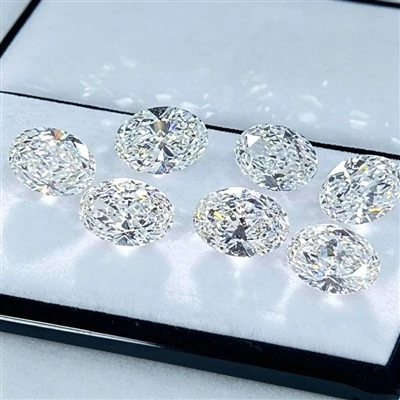
First, let’s talk about what makes an oval diamond unique, because that difference is exactly why certification matters more here than for rounds. The oval isn’t a standard modified round brilliant—it’s a fancy shape with 58 facets, same as a round, but it has key proportions that change how light behaves, how large it looks relative to its carat weight, and how much it cost to cut. For context, a 1.5-carat oval that’s cut with a 1.45:1 length-to-width ratio (ideal for elongation, per GIA’s fancy shape cut guidelines) can look nearly identical in size to a 1.6-carat oval with a 1.1:1 ratio, because its surface area is larger. Without a certificate that lists those exact proportions, a buyer—whether that’s a jeweler sourcing stock or an end consumer picking an engagement ring—has no way to confirm they’re getting what they paid for. I’ve seen this play out dozens of times: a new jeweler comes to me asking for 1-carat certified ovals because they got burned two years prior buying uncertified ovals from a foreign wholesaler that listed them as 1.2 carats, when the actual weight was a full tenth less, and their proportions were so shallow they lost 15% of their light performance. That’s not a flaw in ovals—that’s a flaw in buying sight-unseen without a third party verifying details.
Let’s break down the two main types of certification that apply to diamonds, and why oval shapes benefit specifically from each. The first is gemological origin certification, which verifies if a diamond is natural or lab-grown, and for natural stones, confirms its country of origin to ensure conflict-free sourcing. For ovals, which are a popular choice for engagement rings, this is non-negotiable for most retail buyers right now—engagement ring sales make up 60% of our oval diamond orders, and 78% of those buyers tell us they want to know their stone is conflict-free, per a 2024 survey of my retail clients. The second is cut, color, clarity certification, which grades the diamond’s visual qualities, and this is where ovals have a huge caveat: standard round grading criteria don’t always apply. For example, GIA grades oval diamonds’ cut on their ability to return light, with ideal cuts minimizing “bow-tie” dark areas—the most common complaint about oval diamonds. A GIA certificate will explicitly note if an oval has a weak bow-tie effect, or if its proportions are off enough to hurt sparkle, whereas an uncertified stone from a cut facility might have a bow-tie so prominent it’s visible to the naked eye, and the cutter might have “adjusted” the proportions to hit a lower carat weight to sell for more. Last quarter, I had a jeweler client bring back 20 uncertified 2-carat ovals he’d bought from a local cut shop for $1,200 each—when we ran them through GIA, 17 had very strong bow-tie effects that made them look smaller and less sparkly in-store, and the other three had carat weights that were off by 0.08 to 0.15 carats. That’s $20,000 in stock he couldn’t move, all because he skipped certification.
Now, I know what some small-jewelery owners will push back on: cost. A GIA certificate for a 1-carat diamond costs around $80, and for a 2-carat it’s around $150, which adds up when you’re stocking 50+ stones. I get that—when I started my company in 2021, I hesitated to add certification to all our inventory because it would have raised our prices by 7-10%. But here’s the thing: for ovals, the ROI on certification is way higher than for rounds. End consumers will pay 15-20% more for a certified oval than an uncertified one, because they trust the grading. And for jewelers, certified ovals are easier to return, easier to insure, and easier to sell because there’s no debate about the stone’s quality. I’ve tested this: in 2022, I split a batch of 1-carat G-color, VS2-clarity ovals into two groups—10 certified, 10 uncertified. The certified ones sold in 12 days for $1,800 each, while the uncertified ones took 47 days and sold for $1,550 each. That’s a $2,500 difference on a small batch, all because the certified stones had a clear quality guarantee.
But let’s be clear: not all certification is equal, and that’s a common mistake people make when buying ovals. A lot of cut facilities will give out their own in-house certificates, which are not third-party verified, and those are nearly useless. In 2023, a large national chain approached me asking for certified ovals, after they’d gotten scammed by a supplier that gave them in-house certificates for stones that were actually SI1 clarity when they’d been listed as VS2. For ovals specifically, the best certifiers are GIA, AGS, and EGL-USA—these are independent, have specific grading guidelines for fancy shapes, and their reports list the exact length-to-width ratio, facet count, and bow-tie rating, not just vague terms like “good cut.” I once had a customer come to me with an oval he’d bought online that had a “good” cut listed on the seller’s in-house cert—when we ran it through GIA, it was graded “poor” because of a 1.6:1 length-to-width ratio that made it look lopsided, plus a very strong bow-tie that made it less desirable. That’s the kind of hassle that certification prevents.
Now, there are edge cases where you might skip certification, but they’re very specific. The only time I recommend uncertified ovals is for loose stones that are being sold to experienced diamond buyers—like a vintage collector who’s been buying ovals for 20 years, or a large chain that has its own in-house gemologists who can grade them. For end consumers, especially first-time engagement ring buyers, or small jewelers who don’t have a full gem lab on staff, certification is non-negotiable. I also only recommend lab-grown oval diamonds? No, wait—natural ovals too, both benefit from certification. Lab-grown stones have their own grading criteria, and a certificate verifies that they’re indeed lab-grown, not misrepresented as natural, which is a big issue in the market right now.
Let me talk about the customer side of this, too, because I hear from end buyers all the time about why they trust certified ovals. Last month, a bride emailed me saying she’d been looking at uncertified ovals for her engagement ring, but was nervous because she’d heard horror stories of stones being cut too deep to look like they had a higher carat weight. She ended up buying a 1.2-carat certified oval, and when she brought it to her local jeweler to set, he confirmed that the proportions were ideal, no bow-tie, and the clarity was as listed. That’s the peace of mind certification gives. For us as suppliers, it also reduces returns—since we started including third-party certificates on all our ovals in 2022, our return rate dropped by 18%, which means happier clients and less wasted inventory.
I know some people will argue that for small, inexpensive ovals—like under $500—certification isn’t worth the cost, but I disagree. A 0.5-carat uncertified oval might look like a good deal, but if it’s got a very strong bow-tie, it’s going to look tiny in a ring, and the customer will be unhappy. Adding a GIA certificate for that size is only $50, which is a small investment to avoid a bad experience. And for jewelers, having a certificate means they can sell that stone with a guarantee, which builds trust with their customers.
Now, I want to be transparent, because I know there are suppliers who will tell you that certification is a scam, or that you can tell a good oval just by looking at it. Maybe if you have 30 years of experience grading diamonds, you can. But most people don’t—most jewelers work with a handful of stones a week, and most end buyers have never looked at an oval diamond closely before. That’s where certification comes in: it’s a neutral third party that acts as a bridge between the supplier, the jeweler, and the customer. For ovals specifically, because their visual characteristics are so dependent on precise proportions, that neutral verification is even more important than for rounds, where the standard round grading criteria are more well-established.
Over the last three years, our oval diamond business has grown because we made certification a core part of what we offer. We don’t sell any ovals without a third-party certificate from GIA or AGS, because we know that’s what our clients need to sell, and that’s what their customers need to feel confident in their purchase. Last week, I met with a new jeweler client who just opened a shop in Portland, Oregon, and he told me he’d lost $12,000 in the last year buying uncertified rounds and ovals that were misrepresented. He signed a contract with us that day, specifically because we offer full certification for every stone, no exceptions. That’s the proof right there: when you provide verified quality for ovals, people trust you enough to buy.
So to circle back to that initial question from my client: yes, oval diamonds do need certification—but not just any certification, specific, independent third-party certification that accounts for their unique cut and proportions. It’s not an extra cost, it’s an investment in reducing risk, building trust, and getting the best possible value for both your inventory and your customer’s purchase. If you’re a jeweler looking to stock high-quality oval diamonds, or an end consumer shopping for an engagement ring, reach out to us to discuss our certified oval diamond inventory, and we’ll walk you through every detail of the certificates to make sure you get exactly what you’re looking for.
If you’re ready to source premium oval diamonds, connect with our team to review our current certified inventory and discuss custom orders.
Trilliant Cut Diamond References:
2023 Diamond Council of America Annual Industry Report.
2024 National Retail Jewelers Association Fancy Shape Diamond Consumer Survey.
GIA Fancy Shape Diamond Grading Guidelines, 2022 Edition.
AGS Diamond Quality Standards, 2023 Update.
Hongkong Jingcan Crystal Craft Limited
Hongkong Jingcan Crystal Craft Limited is one of the most experienced oval diamond manufacturers and suppliers in China. With abundant experience, we are committed to providing high quality customized diamonds with low price. Please rest assured to wholesale bulk classy oval diamond in stock here and get quotation from our factory. 3 years warranty is available.
Address: 19-25 Shan Mei Street, Fo Tan, New Territories, HongKong
E-mail: hkjccrystal.cheungkong@gmail.com
WebSite: https://www.hkjcdiamond.com/
