If you’ve got a well, you’ve probably thought at some point about whether your water’s good—for drinking, for watering plants, even for your home’s plumbing. One of the key numbers to keep an eye on here is EC, or Electrical Conductivity. For anyone new to the term, EC measures how well water can carry an electrical current—and that directly ties to how many dissolved solids (minerals, salts, etc.) are in your well water. Too many dissolved solids can make water taste weird, clog your pipes, or even harm crops if you’re using well water for gardening. Too few? That might mean your water’s missing the minerals you need for safe drinking. EC Meter

As someone who sells EC meters (yep, full transparency, that’s what I do), I’ve seen so many well owners skip testing their EC until something goes wrong. I’ve also seen folks waste money on cheap meters that give garbage readings, or overcomplicate the process with lab tests that take days and cost more than they need to. This post is gonna walk you through exactly how to test your well water’s EC at home, no fancy lab degree required, and break down what the numbers actually mean. Let’s dive in.
First, let’s get the basics straight: Why test well water EC in the first place? A lot of new well owners don’t realize that well water’s EC isn’t static. Rain, seasonal changes, even nearby construction or agricultural activity can throw off the dissolved solid levels. For example, if you live in an area with lots of farm fields, fertilizer runoff can seep into your well—raising EC way above safe levels for drinking. Or if your well is in a rocky area, high mineral content (like calcium or magnesium) will spike EC, which can lead to hard water buildup in your dishwasher or water heater. For gardeners, EC is even more critical: different plants need specific EC ranges to grow—tomatoes like around 2.0 mS/cm, for example, while lettuce needs closer to 1.5 mS/cm. Test wrong, and you’ll end up with stunted plants or wasted fertilizer.
Now, let’s talk tools. You can send a sample to a lab, but that’s not always practical. Lab tests take 3-7 days, cost $50-$100, and if you’re checking every few months, that adds up fast. A good EC meter is way more convenient—you get a reading in 10 seconds, and a decent one will last you years. But not all meters are created equal. I’ve had customers come to me with $10 Amazon meters that give readings off by 0.5 mS/cm, which is a huge error for well water. What should you look for in a well water EC meter?
First, make sure it measures in the right units. EC is usually listed in millisiemens per centimeter (mS/cm) or microsiemens per centimeter (µS/cm)—1 mS/cm = 1000 µS/cm. Most residential well water tests will fall between 50 and 5000 µS/cm, so pick a meter that covers that range. Some cheap meters only go up to 1999 µS/cm, which will cut off if your well has high mineral content (common in rocky areas) and give you a false “max” reading instead of the real number.
Second, look for temperature compensation. Water’s conductivity changes with temperature—warm water conducts electricity better than cold water. If your meter doesn’t automatically adjust for temp, you’re gonna get wrong readings when it’s 90 degrees outside vs. 30 degrees. Almost every mid-range meter has this (it’s called “ATC” for Automatic Temperature Compensation), so skip any meter that doesn’t list ATC.
Third, get one with a replaceable probe. The probe is the part that actually touches the water—over time, minerals can build up on it, which mucks up readings. If your probe is sealed and you can’t clean it or replace it, the meter will go bad after a year or two. A replaceable probe saves you from buying a whole new meter every time it gets grungy.
I get it, you might be wondering: “Do I need a $100 professional meter, or will a $30 one work?” For most home well owners, a good mid-range meter ($40-$60) is perfect. They’re accurate enough for residential use, easy to use, and not crazy expensive. The super professional ones are for hydroponic farms or labs—you don’t need that for your backyard or drinking water.
Now, the actual testing process. This is where a lot of people mess up—they dip the meter straight from the faucet, or test right after running water, and get bad readings. Let’s break this step-by-step, so you don’t waste your time.
Step 1: Gather your sample correctly. This is the most important part of getting an accurate reading. If you test running water, the turbulence can push dissolved solids around, and if you test hot water from the tap, temperature is off. Here’s how to do it: Wait until you haven’t run water from your well for at least 2 hours—overnight is even better. This gives the water time to sit in your pipes and return to its normal EC level. Then, turn on the cold water tap (not hot—hot water can leach minerals from your water heater, which skews results) and let it run for 1-2 minutes to flush out any standing water in the pipes. Finally, fill a clean, plastic container with the water—glass works too, just make sure it’s free of any soap or residue from previous uses (even a tiny bit of dish soap will mess up the reading).
Step 2: Prep your meter. Take it out of the case, turn it on, and let it warm up for 10-15 seconds. That’s it for most meters—no complicated calibration needed for home use, but if you want double-check, here’s a quick pro tip: most meters come with a calibration solution (usually 1413 µS/cm or 12.88 mS/cm, standard for EC testing). If you’ve had your meter for more than 6 months, or you know you’ve dropped it, dip the probe in the calibration solution, follow the instructions to calibrate, and you’ll get way more accurate results. Skip calibration if you just bought the meter and haven’t dropped it—factory calibration is usually good enough for first tests.
Step 3: Test the water. Hold your meter by the top (don’t touch the probe with your fingers—oil from your skin can leave a residue and skew readings) and submerge the probe in your water sample. Make sure the probe is fully covered, but don’t dip it so deep that water gets into the meter’s handle (most meters are water-resistant, not waterproof—pro tip: don’t drop it in the bucket). Gently stir the meter around a little to get rid of any air bubbles on the probe—air bubbles act like insulators and will make your reading lower than it should be. Wait 10-15 seconds for the reading to stabilize (most meters will flash until they lock in). Write down that number! That’s your well water’s EC.
Step 4: Clean up. When you’re done testing, take the probe out, rinse it with clean tap water (distilled if you have it, but regular tap works), and dry it off with a soft cloth. Wipe down the meter too, and put it back in its case—storing it in a cool, dry place will make it last way longer. If you tested a really high-EC sample, you might want to soak the probe in a little vinegar for 10 minutes once a month to get rid of mineral buildup—this keeps readings accurate.
Now, what does your number mean? Let’s translate that into something useful. First, remember the conversion: 1 mS/cm = 1000 µS/cm, so if your meter shows 1.5 mS/cm, that’s 1500 µS/cm.
For drinking water: The EPA doesn’t have a strict EC standard, but the general safe range is 50-1000 µS/cm (0.05-1.0 mS/cm). Below that, your water is pretty low in minerals, which might mean it’s “soft” but not harmful (just maybe taste a little flat). Above 1000 µS/cm, you’re approaching levels where dissolved solids can cause problems: hard water (clogged pipes, soap scum), bad taste (salty or bitter), and for some people, high mineral content might not be ideal (if you have kidney issues, for example, you might want to check with a doctor). If your EC is over 1500 µS/cm, that’s a good time to call a water treatment specialist—they can test for specific minerals and recommend a system like a water softener or reverse osmosis.
For gardening: It varies a lot by plant, but most edible plants (vegetables, herbs) do best at 1000-2500 µS/cm (1.0-2.5 mS/cm). Leafy greens like spinach or lettuce like lower EC, around 1000-1500 µS/cm, while fruiting plants like tomatoes or peppers prefer 1500-2500 µS/cm. If your EC is too low, your plants won’t get enough nutrients—they’ll look pale and stunted. If it’s too high, it’s like over-fertilizing—leaves will burn, and fruit will be small. If you’re growing native plants, check a local extension office for their preferred EC range, since that can vary by region.
Wait, I know a lot of folks will ask: “Is testing EC enough, or do I need other tests?” EC is a great first step, but it’s not the only test. It tells you total dissolved solids, but not what those solids are. For example, high EC could be from calcium (good, that’s hard water) or from nitrates (bad, from fertilizer runoff, which is a health risk for babies). That’s why if your EC is way over 1000 µS/cm, you should follow up with a full water test for contaminants. But EC is the fastest, cheapest way to catch a problem early—way before you need to pay for a full lab panel.
I’ve seen so many customers come to me after they noticed their water tasted weird, tested EC, and found it was 3000 µS/cm—way higher than normal for their area. They then tested for nitrates and found runoff from a nearby farm was seeping into their well, and fixed the problem before it affected their family. That’s the power of a quick EC test.
Now, some common mistakes people make when testing well water EC: Let’s clear these up so you don’t mess up your reading.
-
Testing hot water: As I mentioned earlier, hot water leaches minerals from your water heater. Test cold water only—unless you specifically want to check hot water lines, which is rare for most people.
-
Not letting water sit: If you test right after running the tap, you’re getting water that’s been in the pipes, not the stagnant well water that’s in your storage tank or aquifer. Let it sit for 2+ hours, or overnight, for the most accurate reading.
-
Touching the probe: Your fingers have oil, which will leave a film on the probe and make readings lower than they should be. Always hold the meter by the top, not the probe.
-
No air bubbles: Those little bubbles on the probe act like insulators. Give the probe a gentle stir in the water to get rid of them before taking your reading.
-
Forgetting to clean the probe: Mineral buildup on the probe over time will make readings inaccurate. I can’t tell you how many people come to me with a meter that’s 2 years old, and their readings are off by 500 µS/cm because they never cleaned the probe. A quick soak in white vinegar once a month fixes that.
If you’re still on the fence about buying a meter, here’s a quick comparison: Lab tests are great for once-a-year full panels, but if you want to track your well water’s EC throughout the year (especially after heavy rain, which can wash minerals or fertilizer into your well), a home meter is way more convenient. I have customers who test their well every month after big storms, and they’ve caught two potential issues before they became big problems.
Now, if you’re ready to get a meter that actually works for well water, skip the cheap Amazon ones with flimsy probes and no ATC. The right meter will save you time, money, and stress—no more guessing if your well water’s good.
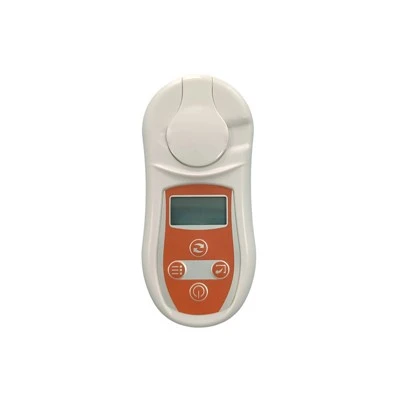
And if you have questions about what your EC reading means, or which meter is right for your well, feel free to reach out to talk through your needs. We’re here to help you get clear, accurate readings so you can keep your well water safe for drinking, gardening, and everything else you use it for.
Nitrite Tester References:
- Environmental Protection Agency (EPA). (2023). Domestic Well Water: A Guide for Private Well Owners. U.S. Environmental Protection Agency.
- National Ground Water Association (NGWA). (2022). Electrical Conductivity of Groundwater: Why It Matters. National Ground Water Association.
- Resh, H. M. (2012). Hydroponic Food Production: A Definitive Guidebook for Advanced Home Growers and Commercial Hydroponic Operations. CRC Press.
- American Water Works Association (AWWA). (2021). Water Quality and Treatment: A Handbook on Drinking Water, 7th Edition. American Water Works Association.
Hangzhou Qiwei Instrument Co., Ltd.
Hangzhou Qiwei Instrument Co., Ltd. is one of the most reliable manufacturers and suppliers of ec meter in China, featured by quality products and good service. Please rest assured to buy bulk durable ec meter in stock here from our factory. We also accept customized orders.
Address: Room 101, Building 25, No.488-1, Donghu North Road, Linping District, Hangzhou City, Zhejiang Province, China
E-mail: info@qiweilab.com
WebSite: https://www.qiweilab.com/
