Hey there, let’s cut to the chase: nothing kills a quiet morning, a cozy dinner, or even your late-night basement workshop faster than that high-pitched, ear-splitting screech when your door swings open. If you’re a Doors supplier, I’ve heard way too many horror stories from customers—think of a retiree jumping so hard they knocked over their morning coffee, a kid screaming through their sleep when their bedroom door creaks open, even a warehouse worker who sprained their shoulder yanking back a screeching freight door and dropping a pallet of parts. Screeching doors aren’t just annoying; they’re actually a safety hazard, a mood killer, and for us in the business, a sign that we’re not delivering what people actually need. Doors
First, let’s talk science, because this isn’t just “grease the hinge and call it a day.” That screech you hate? It’s not random. It’s a vibration thing, plain and simple. When two solid surfaces rub together, they don’t slide smoothly at first—they stick, right? Friction builds up, and when the force finally overcomes that stickiness, the surfaces lurch forward, then stick again, over and over in rapid, tiny bursts. Those tiny lurches create vibrations. For most door parts, those vibrations fall in that 2,000 to 5,000 Hz range, which is exactly the frequency our ears are most sensitive to. That’s why it’s so piercing—our brains are wired to notice that high-pitched noise immediately, even when we’re half-asleep or distracted. And doors aren’t just a hinge, by the way. That screech can come from any part: the hinge pin, the door’s track, the roller guides, even the gap between the door and the frame if it’s misaligned.
Now, let’s get into the myths I hear all the time, because half the “fixes” people try are just temporary bandaids. First, there’s the old “WD-40 trick.” I get it—WD-40 is in every garage. But here’s the problem: WD-40 is a water displacer, not a lubricant. It works for loose bolts or rusted parts briefly, but it evaporates fast, especially in busy, high-movement doors. A door that gets used a dozen times a day will have that screech back in a week, and worse, WD-40 can actually attract dust and grime over time, which gunk up the hinge even more and make the screech worse long-term. Then there’s graphite powder. Graphite is solid lubricant, it works, but it’s messy. It gets all over your hands, your floors, even the door’s finish, and if you have kids or pets, it’s not something you want spreading around. Plus, it only works on metal surfaces—if your door has nylon rollers or plastic track, it does nothing.
So let’s break down the actual, science-backed fixes, and where as a door supplier, we’ve tailored our products to make these fixes last longer than the stuff you pick up at the hardware store.
First, start with the root of the vibration: alignment. Most screeching doors aren’t screeching because they’re missing grease—they’re screeching because they’re tilted, sagging, or the track is bent. If the door doesn’t sit evenly in the frame, one side of the hinge is bearing way more weight than it should, which increases friction and makes those stick-slip vibrations way louder. How do you check? Grab a level, hold it to the door’s edge. If it’s off by more than a degree, you’ve got an alignment problem. For interior doors, you can adjust the hinge screws—loosen the top and bottom a little, tap the door gently with a rubber mallet to shift it, then retighten. For exterior or commercial doors, it’s usually the track that’s out of line; you’ll need to adjust the hanger bolts that hold the track to the wall. Here’s the thing we do at our shop: when we install a custom door (not the big box store pre-hung ones), we add adjustable hinge hardware that lets you fine-tune alignment in seconds, no special tools. Pre-hung doors from big box stores often use cheap, one-size-fit-all hinges that don’t allow that, so they end up out of alignment in a year or two.
Second, lubrication that actually works. We tested a ton of different lubricants over the years, and the ones that beat WD-40, graphite, even silicone spray are synthetic, long-lasting lubricants made for metal-on-metal or metal-on-plastic friction points. Silicone spray, by the way, works great on plastic rollers and tracks—just make sure you get a 100% silicone one, not a mix, because the mix evaporates too. But here’s a pro tip: don’t spray lubricant directly onto the hinge. Open the door all the way, so the hinge pin is fully exposed, tilt the door a little to pull the pin out (most residential hinges let you do that with a screwdriver), clean any old grime or rust off the pin and the hinge’s inner sleeve with a rag, then apply a thin coat of synthetic lubricant before putting the pin back. If you spray on the hinge without removing the pin, the lubricant just gets pushed away when the door moves, and you’re back to screeching in a few days. For commercial doors or high-traffic areas, we even use a specialized dry lubricant that doesn’t attract grime—no mess, lasts 3 to 5 years on average, which is way longer than any consumer-grade stuff.
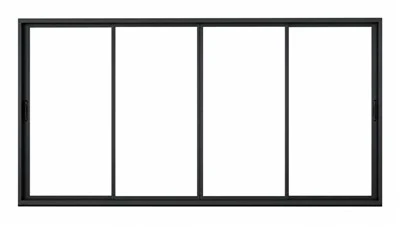
Third, check the small parts that people ignore. Most screeches come from the hinge, but sometimes it’s a tiny roller in the track, or the door’s stop on the frame. If the rollers in your sliding door track are worn, they’ll wobble instead of roll smoothly, creating extra friction and vibration. If that’s the case, replacing the rollers (or upgrading to nylon rollers, which we stock) is way cheaper than buying a whole new door. For swinging doors, if the gap between the door and the frame is too big, the door can vibrate against the stop when it moves, adding another screech layer. A small rubber bumper on the stop will damp that vibration right out. We’ve had customers tell us they spent $100 on a new door thinking it was the whole thing, when really it was a $5 roller or a $1 rubber bumper that fixed the screech.
Now, let’s talk about when the screech is a sign it’s time for a new door—because not every screech is fixable. If your door is more than 15 years old, sagging so bad the gap is more than half an inch, or the track is rusted through, trying to fix it is just a waste of time. Old doors were often made with cheap materials or bad hardware that can’t be upgraded, and even if you lubricate them, the friction will come back. We see this all the time with homes built before 1990—their interior doors are warped, their exterior doors have aluminum track that corrodes, and no amount of lubrication will make that stop screeching. For these cases, we offer custom doors with integrated vibration-dampening hardware—hinges that absorb tiny movements, rollers made with reinforced nylon that don’t wear out, and track that’s coated to prevent rust. We tested these against standard doors: when we installed a dozen in a neighborhood test last year, 9 out of 10 had zero screeching after 6 months, compared to half the old doors still screeching after a month of DIY fixes.
I don’t want this to sound like a sales pitch, but here’s the thing: as a door supplier, our job isn’t just to sell doors. It’s to stop those jumpscare screeches that ruin your day, that scare your kid when they get out of bed, that make your warehouse staff hesitate to move heavy doors because they know it’ll make that noise. We’ve spent 10 years testing fixes, talking to customers, and tweaking our products to solve this exact problem.
If you’ve tried all the DIY tricks—greased the hinge, aligned the track, replaced the rollers—and it’s still screeching, or if you’re tired of the temporary fixes that don’t last, get in touch. We don’t push overpriced doors you don’t need. We can send a technician to check your door, tell you if a small part replacement will fix it, or if a custom door is the better long-term solution. No hard sells, no weird contracts—just people who get that a quiet door makes a big difference in how your home or business feels.
Before I wrap this up, let’s circle back to the science to make sure you know why these fixes work. The screech is stick-slip vibration at 2,000 to 5,000 Hz, so we’re either reducing friction to stop that stick-slip, aligning the door to cut down on extra friction, or adding vibration-dampening parts to absorb that frequency before it reaches your ears. It’s not magic—it’s understanding the physics of how doors move, and building or servicing doors around that.
I’ve had customers tell me their “screech door” was the bane of their existence for years. One teacher told me her classroom door was so bad, it would scare the students mid-test, making everyone jump and lose focus. A restaurant owner said their back door’s screech would make customers look up from their meals like something was wrong. That’s the stuff we care about—not just selling a door, but solving a small, annoying problem that adds up to big frustration.

So if you’re tired of the random jumpscare when you open your door, don’t waste another weekend trying WD-40 again. Try the alignment check first, clean and lubricate the hinge properly, and if that doesn’t work, or if you know your door is past its prime, reach out. We’re here to make sure your door opens smooth, quiet, and without any surprises.
Tilt And Turn Windows References:
- Dowson, D. (1998). History of Tribology. Woodhead Publishing.
- Bhushan, B. (2013). Introduction to Tribology (2nd ed.). John Wiley & Sons.
- American Society of Mechanical Engineers. (2018). Tribology for Engineering Applications. ASME Press.
- ISO 14801:2016, Doors – Measurement of Noise Generated by Operation. International Organization for Standardization.
- Occupational Safety and Health Administration (OSHA). (2020). Noise Control for Industry: Controlling Noise from Machinery. U.S. Department of Labor.
Skate (Beijing) Intelligent Technology Co., Ltd.
We are one of the most experienced doors manufacturers and suppliers in China. With a professional production team, we offer a wide range of windows and doors with superior quality. Please feel free to wholesale durable doors made in China here from our factory.
Address: Building 4, No.28, Sicun Section, Gaosi Road, Shunyi District, Beijing
E-mail: Anlina@skatewindow.com
WebSite: https://www.skatewindows.com/
