If you’ve ever stood at a concert, sports arena, or even a mall entrance and gawked at that big, super-crisp screen showing live game footage or a flashy ad, chances are it wasn’t a traditional TV or projector—it’s an LED video wall. As someone who’s spent years working with these bad boys (and running a supply company that brings them to events, businesses, and venues across the country), I get why a lot of folks think they’re some kind of high-tech magic. Nope, it’s actually pretty straightforward once you break it down, and I’m gonna walk you through every part like we’re grabbing coffee and geeking out over tech. LED Video Wall
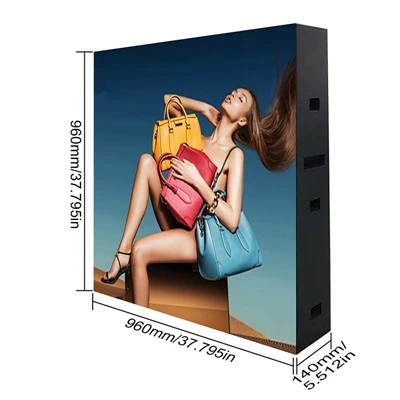
First off, let’s clear up a common mix-up: LED video walls aren’t just “really big TVs.” Your living room TV uses a bunch of tiny liquid crystal displays (LCDs) that need a backlight to show color, right? Projectors shine light onto a screen, which then bounces it back to your eyes. LED walls? They’re made of thousands of tiny, individual light bulbs called LEDs—light-emitting diodes—each of which makes its own light, color, and brightness. No backlight, no screen, just little lights working together like a team of tiny artists painting a giant picture.
Let’s start with the building blocks of the actual wall. You won’t see these parts when the wall’s up and running, but they’re everything that makes it work. First, there are LED modules, the little square boards that are the base of the wall. Each module holds a bunch of individual LEDs, grouped by color: red, green, and blue (RGB). If you’re into high school art class, this is the exact same color mixing we learned about back then—mix red, green, and blue light in different amounts, and you get every color in the rainbow. One module might have 192 LEDs, another 512, depending on how bright or detailed the wall needs to be.
Then there’s the pixel pitch. That’s the distance between the center of one LED and the center of the next, measured in millimeters. A smaller number means closer LEDs, which equals a sharper, more detailed image. If you’re standing 10 feet away, a 10mm pitch wall will look just as crisp as a 3mm one, but get up close, and you’ll see the tiny lights in the big-pitch one. For places where people are right up against the wall—like trade show booths or retail store displays—we use 1mm or 2mm pitch, so no one sees individual dots. For a football field’s end zone, where fans are sitting 50 yards away, a 15mm or even 20mm pitch works, since you can’t tell the difference between dots from that far out. That’s a big cost saver, too—smaller pitch = way more LEDs = way higher price, so we help clients pick the right pitch for their space to avoid wasting money.
Once all the modules are bolted together into a big wall, you need a way to control all those LEDs. That’s where the processor comes in, and it’s the unsung hero of the whole setup. Let’s say you want to show a video: the video file is on a computer or media player, right? It sends a signal to the processor, which is basically the brain. The processor doesn’t just pass the video along—it splits the big video image into tiny little bits, each one assigned to a single LED. It also adjusts brightness for every LED in real time, so dark scenes are super dark, bright scenes (like a sunlit football field) are blindingly vivid, and there are no weird gaps or mismatched colors between modules. If you’ve ever seen a cheap video wall where the left module is blue and the right is yellow? That’s because they skipped a good processor. Our team tests every single wall we ship to make sure the processor is calibrated so all the modules match perfectly.
Wait, can’t you just hook a regular TV cable or laptop directly to the wall? Kind of, but not really. Most of the time, the wall is sending a signal that’s way bigger than what a regular laptop can output. If you tried to plug a laptop into a 10×20 foot wall, it’d shrink the image to fit, and you’d get big, blurry dots. The processor takes the high-resolution signal from your source (4K video, live camera feed, PowerPoint, whatever) and scales it up to match the exact number of pixels the wall has. That’s the only way you get that crisp, seamless image everyone loves.
Now, let’s talk about what makes LED walls better than the old alternatives, because that’s why they’re everywhere now. Traditional big screens used to be projection screens, which would dim in bright rooms—you could barely see a movie during the day in a mall with a projection wall. LED walls get bright enough to be seen even in direct sunlight, which is why you see them on billboards and stadiums. They’re also way more durable: projectors have bulbs that burn out after a few thousand hours, but LEDs last 50,000 hours or more. That’s like 10 years of 12-hour days, no replacement needed. And if one LED burns out, you don’t have to fix the whole wall—you just swap out the tiny module, which is a cheap, 5-minute fix. We stock replacement modules for every wall we sell, so clients never have to wait weeks for a repair.
Let’s go through a quick, real-world example to make this less abstract. Last year, we installed a 20×10 foot LED wall for a local car dealership’s new grand opening. The space is a big, open showroom, so we picked a 3mm pitch (people are standing 6-12 feet away, so it needs to be sharp) and a processor that can pull live camera feeds of the cars, promotional videos, and even scrolling text for the sale prices. On opening day, the client wanted to show a live feed of the new SUVs being unloaded from the truck, plus a countdown to the 50% off deal. The processor took the live camera signal, split it into pixels, and sent each pixel to the right LED modules—so even when the feed panned across the truck, every LED changed instantly to match. No lag, no blurriness, just a huge, clear image that drew people in from the street.
Another common question: can you use an LED wall indoors and outdoors? Yep, but they’re different. Outdoor walls need weatherproof modules, sealed to keep rain, dust, and humidity out. We also make them brighter—up to 5,000 nits, which is bright enough to see in direct sunlight. Indoor walls are lower brightness (1,000-2,000 nits is enough) and thinner, since you don’t need to protect against rain. A lot of our clients get confused about brightness levels, so we always ask them where the wall will go before we give a quote—no point in selling an outdoor wall for an indoor mall, since it’d be too bright and wash out the images.
Wait, what about curved LED walls? Those are super popular now, right? A lot of people think curved walls are some fancy new tech, but it’s actually just curved modules. The modules are made with bendable circuit boards, so you can bolt them into an arc instead of a flat plane. Why do that? Curved walls give a more immersive experience, like you’re inside the image instead of looking at a flat screen. We installed a curved 15×8 wall for a movie theater last year, and the manager said customers commented that it felt like they were in the middle of the action, not just watching it. The processor still works the same—just adjusts the image so it fits the curve, so no weird stretched text or uneven images.
Now, let’s bust a couple of myths, because I hear these all the time from potential clients. First myth: LED walls are way too expensive for small businesses. Yeah, a big outdoor stadium wall costs hundreds of thousands, but small indoor walls for retail stores or small event spaces start at a few thousand dollars. We work with everyone from small coffee shops that want a wall showing their menu, to big corporations that need walls for their conference rooms, so we have options for every budget. Second myth: they’re hard to set up. A lot of people think you need a crew of techs and a week to install, but most small walls can be set up by two people in a few hours. We include a step-by-step guide, and our support team is on call for anyone who gets stuck, no extra charge. Third myth: they use a ton of electricity. Compared to old projection walls, LEDs are way more efficient. A 10×10 LED wall uses about the same power as a few space heaters, not a whole house. That’s a big deal for clients worried about utility bills.
So, to wrap it up, how does an LED video wall work? Let’s recap in simple terms: it’s a grid of tiny, color-changing LEDs (each making its own light) controlled by a smart processor that takes your video, image, or feed, splits it into millions of tiny pixels, and tells each LED exactly what color and brightness to be, to make a seamless, big image. No magic, just good design and quality parts.

If you’re thinking about getting an LED wall for your business, event, or venue, I get it—there’s a lot to consider, from pitch size to brightness to installation. That’s where we come in. We’re not just a supplier, we’re the guys who help you pick the right wall for your space, answer all your questions, and make sure it works for years to come. Whether you’re a retail store owner who wants to draw customers in, a venue host who needs a wall for concerts, or a corporation that wants to upgrade their conference room, we’ve got you covered. Don’t hesitate to reach out to our team to chat through your needs—no sales pitch, just straight talk about what will work best for you.
Novastar Control System References
- National Electrical Manufacturers Association. (2021). LED Display Performance Standards.
- Society for Information Display. (2022). Fundamentals of LED Video Wall Technology.
- Display Daily. (2023). Market Trends in Commercial LED Video Walls.
Shenzhen Starcolor Optoelectronics Co., Ltd.
As one of the most professional led video wall manufacturers and suppliers in China, we’re featured by quality products and good price. Please rest assured to wholesale discount led video wall in stock here from our factory. Customized orders are welcome.
Address: 2nd floor, Building A, Hongjingda Industrial Park, Shiyan town, Bao’an District, Shenzhen
E-mail: starcolorled@outlook.com
WebSite: https://www.starcolordisplay.com/
