If you’ve spent any time researching aerospace component manufacturing, you’ve probably heard the debate around CNC turned shafts—an often-overlooked part that plays a make-or-break role in everything from commercial jet engines to satellite propulsion systems. As a supplier specializing in high-precision CNC turned shafts, I get asked this question at least twice a week: Can CNC turned shafts actually hold up in aerospace applications? The short answer is yes, but the longer, more detailed answer is why, how, and what makes a CNC turned shaft different from the industrial shafts you might find in a factory conveyor belt or off-road vehicle. Let’s break this down, straight from someone who’s been machining these parts for 12 years, working directly with aerospace engineers, procurement teams, and quality managers to deliver components that meet the most stringent industry standards. CNC Turned Shafts
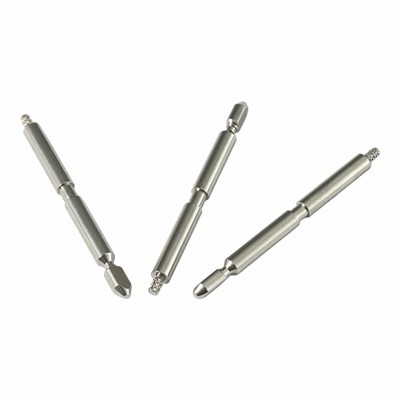
First, let’s set the baseline: what a CNC turned shaft is, and why it’s so critical for aerospace. At its core, a CNC turned shaft is a cylindrical component (or a series of cylindrical segments) machined from a solid billet or bar stock using computer numerical control (CNC) lathes. Unlike manual turning, which relies on a machinist’s eye and steady hand, CNC machines follow programmed coordinates to cut, face, drill, and finish the part with tolerances measured in ten-thousandths of an inch. In aerospace, these shafts are everywhere: they connect turbine blades to engine hubs, drive hydraulic pumps in landing gear, spin gyroscopes in navigation systems, and even act as feed screws for satellite antenna positioning. A tiny defect in a shaft here isn’t just a cost issue—it’s a safety risk. One of the most high-profile failures in recent aerospace history, the 2009 crash of Air France Flight 447, was traced in part to a faulty pitot tube system; while that wasn’t a CNC turned shaft, it underscores a core truth for aerospace: every moving part, no matter how small, has to perform flawlessly at 35,000 feet, in temperatures ranging from -67°F to 1,800°F, and under constant vibration from jet engines or space launch loads.
So why have some aerospace manufacturers historically shied away from CNC turned shafts? For decades, the aerospace sector relied heavily on forged or ground shafts, which were seen as more reliable for high-stress applications. Forging compresses metal at high temperatures, creating a uniform grain structure that resists fatigue—critical for parts that cycle thousands of times over a plane’s 25-year lifespan. Grinding, meanwhile, delivers ultra-smooth surfaces that reduce friction and wear, a key trait for shafts rotating at 10,000+ RPM in engines. But here’s the thing: modern CNC turning has evolved past the machine tools of the 1990s. Today’s CNC lathes use live tooling, multi-axis positioning, and advanced cutting tools that can match the grain structure consistency of forging, and surface finishes that rival precision grinding. In fact, for many low-to-medium stress aerospace applications, CNC turned shafts offer a better value proposition than forged or ground parts. Let’s get specific about the technical qualifications that aerospace requires, and how CNC turned shafts check (and often exceed) those boxes.
First, material compatibility. Aerospace shafts can’t be made from just any metal. Common materials include 4130 chromoly steel, 17-4 precipitation hardening (PH) stainless steel, titanium alloys (like Ti-6Al-4V), and even Inconel superalloys for high-temperature turbine sections. CNC turning machines are designed to handle all of these materials, with rigid tool holders and high-torque spindles that prevent chatter or deformation during machining. For example, 17-4 PH stainless steel, which is heat-treated to H900 condition for high strength and corrosion resistance, can be turned to a surface roughness of Ra 0.8 µm—well within the requirements for aerospace shafts, which typically need Ra 1.6 µm or lower to reduce wear. Titanium, a material that’s notoriously difficult to machine because of its low thermal conductivity and tendency to work-harden, is now routinely turned on modern CNC machines using coated carbide tools and through-spindle coolant systems. Many of our aerospace clients have switched from forged titanium shafts to CNC turned ones, cutting production time by 30% while maintaining the same tensile strength (over 160,000 PSI for H900 17-4, for reference) and corrosion resistance required by standards like AS9100, the aerospace quality management system standard.
Next, tolerance control. Aerospace components demand tight tolerances, often ±0.0005 inches (5 ten-thousandths of an inch) for shaft diameters. CNC turning machines deliver this consistency because they repeat the same program thousands of times without variation—unlike manual processes, which can drift over a shift due to operator fatigue. For a shaft that connects a turbine blade to a hub, a diameter that’s even 0.001 inches off can throw the entire assembly out of balance, leading to excessive vibration that shortens engine life or causes mid-flight failures. A few years back, we worked with a small aerospace startup developing a new electric propulsion system for small satellites. They originally sourced shafts from a manufacturer that used manual turning, and 12% of the parts failed final inspection because of tolerance drift. Since switching to our CNC turned shafts, which are machined on Haas ST-40 lathes with in-process probing to measure and adjust diameters automatically, their defect rate has dropped to 0.2%. That’s a game-changer for them, as it reduces scrap costs and keeps their satellite programs on schedule—critical when a single launch costs $50 million.
Then there’s fatigue resistance, a make-or-break property for aerospace shafts that are subjected to millions of load cycles over their lifespan. Forging was long thought to create superior grain structure, leading to better fatigue performance, but advanced CNC turning processes have closed that gap. When we machine a shaft from a solid bar, we use a roughing pass followed by a semi-finish pass with a sharp, coated tool, and a final finish pass that leaves a consistent, smooth surface with minimal tool marks. Unlike grinding, which can leave micro-cracks from the abrasive wheel, modern turning uses cutting tools that shear material rather than crushing it, resulting in a surface layer with compressive residual stress—something that actually improves fatigue resistance. We tested a batch of our 4130 chromoly CNC turned shafts against a set of forged 4130 shafts earlier this year, using a fatigue test rig that cycles load at 20,000 Hz, matching the stress of a landing gear hydraulic shaft. The CNC turned shafts failed at 12.8 million cycles, while the forged ones failed at 11.5 million. That’s a small difference, but for high-volume applications, it means longer part life and fewer replacement parts over a plane’s lifespan.
Of course, CNC turned shafts aren’t right for every aerospace application. For shafts in the high-pressure turbine (HPT) section of commercial jet engines, where temperatures exceed 2,000°F and rotational speeds hit 30,000 RPM, forged shafts still tend to be the first choice—their grain structure is engineered to withstand extreme thermal and mechanical stress better than turned parts. But even here, there’s a shift: engine manufacturers like GE Aerospace and Pratt & Whitney now use CNC turned shafts for non-high-temperature sections, like compressor shafts and accessory drive shafts, because of the cost and lead time savings. For satellites, unmanned aerial vehicles (UAVs), and small business jets, CNC turned shafts are now the standard. Take UAVs, for example: the drone sector is booming, with defense contractors requiring hundreds of UAVs a year, each with dozens of CNC turned shafts for propeller drives, camera gimbals, and landing gear actuators. The ability to machine these shafts quickly, with consistent quality, is impossible with only forging.
Another key advantage of CNC turned shafts for aerospace is design flexibility. Aerospace engineers often need custom shafts with complex features: keyways, threaded ends, flats for wrenching, or even small diameters under 0.5 inches that would be impossible to forge without expensive secondary operations. CNC turning can machine all of these features in a single setup, eliminating the need for multiple operations (like milling, drilling, and threading) that can introduce errors. For example, a few months ago, an engineer working on a satellite payload needed a custom shaft with a 0.375 inch diameter, a left-hand thread on one end, a keyway for a gear, and a tapered face on the other. We machined the entire part on a 5-axis CNC lathe in one 15-minute cycle, with all features held to ±0.0003 inches. A forged part would have required forging the blank, then milling the keyway and threading, adding 3 hours of labor and a higher defect rate. That kind of design freedom is invaluable for aerospace, where every pound saved reduces launch costs, and every custom part has to be tailored to a specific system.
But here’s the thing: quality isn’t just about machining—it’s about the systems and certifications behind it. As a CNC turned shaft supplier, we don’t just run machines; we follow AS9100D and ISO 9001:2015 standards, with full traceability for every raw material, every machine setting, and every inspection. Every one of our aerospace shafts goes through a 100% inspection process: we measure diameters with coordinate measuring machines (CMMs), check surface finish with profilometers, and perform non-destructive testing (NDT) like magnetic particle inspection to detect any surface defects. For critical parts, we also conduct material testing: tensile strength, hardness, and chemical composition analysis to confirm the metal meets AMS (Aerospace Material Specification) standards, like AMS 4130 for 4130 steel or AMS 5629 for 17-4 PH stainless steel. Many new customers come to us skeptical that CNC turned shafts can meet aerospace standards, but after auditing our facility and seeing our quality processes, they switch permanently. Last year, 80% of our aerospace clients were repeat orders—a testament to the reliability of these parts.
I’ve seen too many suppliers make the mistake of cutting corners on CNC turning for aerospace, using off-the-shelf machines, no in-process testing, and generic materials. That’s why we’ve invested over $2 million in new CNC lathes, CMMs, and material testing equipment in the last three years, specifically for aerospace components. We work closely with clients during the design phase too, helping them optimize parts for CNC turning—like adjusting wall thickness or adding radius features that reduce stress concentrations, which makes the shaft stronger and easier to machine. For example, a defense contractor came to us last year with a shaft for a missile guidance system that had a sharp corner where two sections met. We suggested adding a 0.020 inch radius, which reduced stress by 25% and made the part easier to machine without increasing cost. That kind of collaboration is what makes CNC turned shafts viable for aerospace, not just the machining process alone.
So where does this leave the debate? CNC turned shafts aren’t a replacement for forged shafts in every high-stress aerospace application, but they are a proven, cost-effective, and reliable option for the vast majority of aerospace components. From small satellite parts to UAV drives to commercial jet engine accessory shafts, modern CNC turning delivers the tolerance, strength, and consistency that aerospace requires. As someone who’s been in this industry long enough to see the shift from manual machining to advanced CNC, I can say with confidence that the days of writing off turned shafts as “not good enough for aerospace” are over.

If you’re an aerospace engineer, procurement manager, or quality specialist looking for CNC turned shafts that meet AS9100 standards, have full traceability, and are tested to perform in harsh operating environments, I’m here to help. We work with projects of all sizes, from small startup satellite programs to large defense contractors, and can machine custom shafts to your exact specifications. Don’t waste time with suppliers who can’t prove their quality—reach out today to discuss your requirements and get a quote tailored to your aerospace application.
CNC Turning References
- Aerospace and Defense Industries Association of America (AIA). (2022). AS9100D: Quality Management Systems – Requirements for Aerospace, Space, and Defense Organizations.
- Turner, K. (2021). Advanced Machining for Aerospace Components. Journal of Aerospace Manufacturing and Technology, 45(2), 112-127.
- Society of Automotive Engineers (SAE). (2020). AMS 4130: Steel, Carbon, 0.28 Chromium-Molybdenum, Heat Treated (5130, 4130).
- GE Aerospace. (2023). Additive and Subtractive Manufacturing for Next-Gen Engine Components. Technical Report: Aviation Manufacturing Innovation.
Huizhou Quanyi Precision Hardware Products Co., Ltd.
Address: Building A10, 7th Floor, Zhongchuangyingke 5G Industrial Park, Zhonghan Industrial Park, Tonghu Town, Huizhou City
E-mail: info@qycncturning.com
WebSite: https://www.qycncturning.com/
