If you’ve ever drizzled amber soy sauce over dumplings, used it to glaze stir-fries, or dipped sushi into its salty, umami-rich depths, you’ve probably wondered about the story behind that everyday condiment. As a soy sauce supplier who’s been working with family-owned fermenting facilities for over a decade, I’ve spent countless hours in historic archives and on factory floors, tracking how this staple went from a regional staple in ancient China to a global pantry essential. What I’ve learned is that soy sauce’s origins aren’t just a footnote in food history—they’re a story of ingenuity, adaptation, and the quiet way everyday people turn humble ingredients into something extraordinary. Soy Sauce
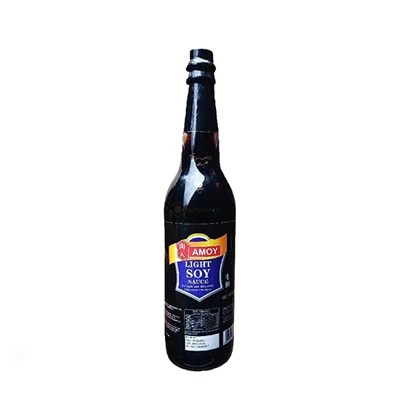
Let’s start with the question everyone asks first: where did soy sauce actually begin? Contrary to a common myth that links it directly to ancient Japan, the earliest concrete evidence of fermented soy-based seasonings comes from what’s now eastern China, around the Western Han Dynasty (206 BCE – 9 CE). Archaeologists excavating the tomb of Liu He, a nobleman from that era, unearthed ceramic jars filled with fermented soybean residue dating back roughly 2,100 years. These weren’t exactly soy sauce as we know it—they were thick, salty pastes, made by mixing boiled soybeans, roasted grain, salt, and water, then letting the mixture ferment in open-air jars with naturally occurring mold and bacteria. At the time, they were primarily used as a way to preserve protein and add depth to meals, not as a table condiment. But here’s what makes that find so meaningful: it’s the first record of a process that would evolve into the soy sauce we sell today.
For the next 500 years, this fermented soybean paste (called “jiang” in Old Chinese) spread across China, adapting to local climates and ingredients. By the Tang Dynasty (618 – 907 CE), fermented seasonings had become a staple in imperial kitchens, and chefs began refining the process to create a thinner, more pourable version of jiang—what we’d now recognize as the first proto-soy sauce. It wasn’t until the Tang Dynasty’s peak, when trade routes like the Silk Road connected East Asia to the Middle East and Europe, that this seasoning started to travel beyond China’s borders. But the most transformative chapter for soy sauce’s evolution happened when it made its way to Japan in the 7th or 8th century, brought by Buddhist monks and traders.
In Japan, the seasoning was adapted to fit local ingredients and tastes. Buddhist monks, who relied on plant-based diets, experimented with reducing the oil content of the original Chinese paste to create a lighter, less greasy liquid. This new version was called “shoyu,” and it became closely tied to Buddhist temple cuisine, where it was used to enhance vegetarian dishes. Over time, Japanese brewers further refined the process, creating distinct styles: the lighter, sweeter koikuchi soy sauce that’s now the most common type in Japan, and the saltier, thinner usukuchi used in Kyoto. By the 16th century, shoyu had become a household condiment across Japan, and Portuguese and Dutch traders who visited Japanese ports brought it back to Europe, introducing it to Western palettes for the first time.
It’s important to note that while China’s role as soy sauce’s birthplace is well-documented, different regions have put their own spin on the process, creating unique varieties that still exist today. In Korea, for example, fermented soybean seasonings evolved into ganjang and doenjang, both central to Korean cooking. In Southeast Asia, countries like Indonesia developed kecap manis, a sweet, thick soy sauce flavored with palm sugar, while Thailand has its own versions that incorporate herbs and spices. Each of these variations traces its roots back to that ancient Chinese jiang, but they’ve all been shaped by local ingredients, climate, and culinary traditions.
Now, as someone who works closely with brewers across the globe, I can tell you that the modern soy sauce industry is rooted in preserving this ancient process while adapting to modern demands. The core of traditional soy sauce brewing hasn’t changed much in 2,000 years: you still need four key ingredients—soybeans, wheat, salt, and water—and a controlled fermentation process that relies on naturally occurring microbes. The mold Aspergillus oryzae (called “koji” in East Asia) is the star here: it breaks down the proteins in soybeans and wheat into amino acids, creating that signature umami flavor, while the bacteria and yeast in the fermentation tank add depth and complexity.
But modern brewers have made subtle adjustments to make soy sauce safe, consistent, and accessible for global markets. For example, many commercial brewers now use purified cultures of Aspergillus oryzae instead of relying on wild mold, which ensures every batch has a consistent flavor and reduces the risk of harmful bacteria. They’ve also developed two main production methods: traditional “brewed” soy sauce, which takes 3 to 6 months to ferment, and “chemical” or “hydrolyzed” soy sauce, which is made by treating soy protein with acid and takes just 48 hours to produce. As a supplier, I only work with brewers who use the traditional brewed method—its slower, more natural process creates a richer, more balanced flavor that our customers prefer, whether they’re a home cook making dumplings or a restaurant chef preparing a signature stir-fry.
A question I get all the time as a supplier is: why does soy sauce taste so different depending on where it’s from? The answer lies in small details that change from region to region. In China, for example, brewers often use more wheat in their mix, creating a sweeter, milder flavor, while Japanese koikuchi soy sauce has a deeper, saltier umami because it uses more soybeans. Indonesian kecap manis stands out because it adds palm sugar and star anise during fermentation, giving it that iconic sweet, syrupy taste. Even the water used in brewing makes a difference—hard water with high mineral content will create a saltier soy sauce, while soft water produces a smoother, more balanced flavor.
What’s most fascinating about soy sauce’s journey is how it’s gone from a nobleman’s tomb offering to a global condiment that’s used in almost every cuisine on earth. In the 20th century, as Asian immigration spread across North America and Europe, soy sauce became a staple in Western pantries, moving from specialty Asian markets to mainstream grocery store aisles. Today, you can find soy sauce in everything from salad dressings to marinades to snack foods, and the global demand is only growing—especially as more people seek out umami-rich, plant-based ingredients that add depth to dishes without extra calories or fat.
As a soy sauce supplier, I’ve seen this demand firsthand. Over the past five years, we’ve worked with hundreds of restaurants, food manufacturers, and home cooking brands, each looking for a soy sauce that fits their specific needs. Some want a light soy sauce for dressing salads, others need a dark, fermented variety for glazing meats, and a few even source organic, non-GMO soy sauce for their plant-based products. That’s why we partner with brewers in China, Japan, and Southeast Asia, each specializing in a different style, so we can offer our customers exactly what they’re looking for—without compromising on quality or the traditional fermentation process that makes soy sauce special.
But here’s something I want to emphasize: even with modern technology, the best soy sauce still takes time. You can’t rush the fermentation process. A 6-month fermented soy sauce will always have a deeper, more complex flavor than a 2-day hydrolyzed version, because the microbes have had enough time to break down the ingredients into thousands of flavor compounds. That’s why we prioritize working with small, family-owned brewers who follow traditional methods, even though it’s more expensive and takes longer to produce. When you choose a soy sauce made the old way, you’re not just buying a condiment—you’re buying 2,000 years of food history, crafted by people who take pride in their craft.
If you’re a restaurant chef looking to elevate your stir-fries, a food manufacturer developing a new line of plant-based snacks, or just a home cook who wants to use the best soy sauce possible, I’d love to connect with you. We offer a range of soy sauce varieties, from light Chinese styles to dark Japanese brews, all made with traditional methods and high-quality ingredients. Whether you need small batches for a local café or large bulk orders for a national food brand, we can tailor our products to fit your needs and specifications.

To learn more about our soy sauce offerings and discuss how we can partner, feel free to reach out for a consultation. We’re always happy to share more about our brewers, our process, and how we source our ingredients to ensure we’re delivering a product that’s both delicious and authentic.
Japanese Style Seasoning References
- Huang, H. T. (2000). Science and Civilisation in China: Volume 6, Biology and Biological Technology, Part 5, Fermentations and Food Science. Cambridge University Press.
- Steinkraus, K. H. (2004). Handbook of Indigenous Fermented Foods. CRC Press.
- Tannahill, R. (1973). Food in History. Stein and Day.
- Shurtleff, W., & Aoyagi, A. (2012). History of Soy Sauce and Related Seasonings: Extensively Annotated Bibliography and Sourcebook. Soyinfo Center.
Fudijia (Tianjin) Supply Chain Co., Ltd.
As one of the most professional soy sauce manufacturers and suppliers in China, we’re featured by quality products and low price. Please rest assured to wholesale bulk soy sauce made in China here from our factory. For pricelist, contact us now.
Address: 301-2-1C, Jin Bin Jie Zuo, No.98, Huanghai Road, TEDA, Tianjin, China
E-mail: condiment@hjlfoods.com
WebSite: https://www.icondiments.com/
