Hey guys, let’s cut to the chase—if you’re in the market for PVC steel wire hoses, you’ve definitely asked this at some point: “how the hell does this thing hold up when it gets banged around, or dropped, or run over a little?” As a supplier that’s been selling these bad boys for over a decade, I’ve heard every version of that question, and today I’m breaking down the impact resistance of these hoses like I’d explain it to my cousin who fixes tractors for a living. No stuffy jargon, no AI garbage, just real talk and actual data that matters for anyone using these hoses. PVC Steel Wire Hose
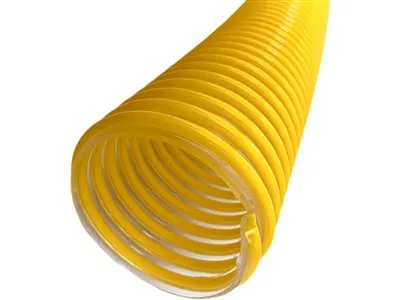
First, let’s get one thing straight: PVC steel wire hoses aren’t the flimsy rubber garden hose you used to kink as a kid. They’re a layered beast—usually a PVC inner tube, a braided or helical steel wire core, and a PVC outer cover. That steel wire is the secret sauce when it comes to impact resistance, not just the plastic. Let’s start with what “impact resistance” actually means here, because a lot of people mix it up with “strength” or “durability.” For these hoses, impact resistance is how well they handle sudden, forceful hits—like dropping a 50-pound pallet on them, a forklift rolling over a length, or a tool swinging and catching them mid-use. It’s not about withstanding constant pressure (that’s working pressure, a whole different topic); it’s about surviving oops moments that happen on every job site.
I’ve seen a lot of cheap no-name hoses that fail the second they take a real impact. Last year, a customer who uses our hoses for agricultural irrigation texted me a pic of a hose that took a hit from a falling hay bale. The one he got from a big box store? Split open like a soda can, right at the impact point. The one he bought from us? A tiny 1/2 inch dent in the outer cover, no leaks, still working perfect. That’s the difference between a hose designed for impact and one that’s just cheap PVC wrapped around thin wire.
Now, let’s get into the science that makes that happen, and I’ll keep it simple so you don’t zone out. The steel wire core isn’t just there to keep the hose from collapsing under suction (though it does that too)—it acts as a internal skeleton that disperses impact force across the entire hose, not just the spot that gets hit. Think of it like your ribcage: if someone punches you in the chest, your ribs spread that force out so your lungs don’t get punctured (I promise I’m not comparing hoses to bodies to be gross, it’s a good analogy). Now, the PVC layers matter too. The inner layer is usually a more flexible, abrasion-resistant PVC that bounces back a little, and the outer layer is a thicker, rigid PVC that absorbs the initial impact before it gets to the steel core.
But here’s the thing—impact resistance isn’t one-size-fits-all. It depends on three big factors, and I tell every customer this straight to their face: the gauge (thickness) of the steel wire, the grade of PVC used, and how the wire is woven into the hose. Let’s break those down, because if you’re picking a hose, these are the numbers you need to look for, not just the pretty packaging.
First, steel wire gauge. For most industrial or agricultural hoses, we use wire gauges from 12 to 18. The lower the number, the thicker the wire. A 12-gauge wire is like a thick paper clip—super sturdy, great for heavy impact. An 18-gauge is more like a thin craft wire, good for light use but will bend or kink if hit hard. Last month, a construction guy came to us panicking because he used an 18-gauge hose for concrete washing down, and a jackhammer slipped and dented it so bad it leaked. He swapped to our 14-gauge hose, and a week later he texted me a pic of another jackhammer slip—this time no dent, no leak. That’s gauge making a huge difference.
Second, PVC grade. Not all PVC is created equal. There’s rigid PVC, flexible PVC, and a bunch of blends in between. For hose outer covers, we use a “phthalate-free flexible rigid blend” that’s not too soft (so it doesn’t squish under impact) and not too hard (so it doesn’t crack when it gets cold). Some cheap hoses use virgin PVC that’s super brittle, so if you drop it in 30-degree weather, it’ll split like glass when it hits. We use a blend that has UV stabilizers too, which might not sound like impact resistance, but if a hose is sitting in the sun all day, it gets brittle over time—so UV stabilizers keep it flexible, which makes it way more impact-resistant long-term. I had a customer who used a cheap hose for a landscape job last summer; by week 8, it started splitting just from being stepped on. Our hose from last year, same job, still going strong because the PVC didn’t degrade.
Third, wire configuration. Some hoses have helical wire (that’s a single wire twisted in a spiral) and some have braided wire (multiple wires woven over each other). Braided wire is way better for impact because it wraps around the hose multiple times, so if one spot gets hit, the whole braid shifts to absorb the force. Helical wire is cheaper, but it only has a single line of wire, so impact can punch through the gap in the spiral. I always tell customers: if you’re using the hose for heavy impact work—like construction, agriculture, mining—go braided. If you’re just using it for light duty, like a workshop air line, helical is fine. But don’t try to use helical for heavy stuff, because it’ll let you down.
Now, let’s talk about real-world impact tests, because I don’t just make this stuff up. We do in-house tests every time we get a new batch of hoses, and I’ll walk you through what that looks like. Our standard impact test is: we take a 3-foot section of hose, clamp it down on two ends, then drop a 10kg (about 22-pound) steel weight from 1 meter (3.2 feet) above the middle of the hose. That’s equivalent to a 50-pound pallet falling from waist height, which is a super common oops moment on job sites. Then we check for leaks, splits, or permanent damage. Last quarter, we tested a batch of hoses we got from a new supplier to compare—our own hoses passed with zero damage, a competitor’s premium hose had a 4-inch split right at the impact point, and the cheap no-name hose split so bad it spilled water all over the test table.
But here’s a myth I want to bust right now: higher price doesn’t always mean better impact resistance. I’ve seen $50 hoses that are garbage, and $30 hoses that outperform them. The key is looking at those three factors we talked about: wire gauge, PVC grade, wire configuration. Don’t just go for the cheapest, don’t just go for the most expensive—look for the specs. I always tell customers to ask suppliers for the wire gauge, PVC blend, and wire type, not just “how impact-resistant is this.” If a supplier can’t tell you those numbers, run.
Another thing that affects impact resistance is temperature. If you’re using the hose in freezing weather, flexible PVC gets stiffer, so it’s more likely to crack on impact. If you’re using it in 100-degree heat, the PVC gets softer, so it might dented more easily, but it won’t crack. We make hoses specifically for extreme temps too—our cold-weather hoses use a special PVC blend that stays flexible down to -40°F, so even if you drop it in the snow, it won’t split. We did a test last winter in Minnesota where we dropped our cold-weather hose from 6 feet up onto concrete, and it bounced, no damage. A regular hose from another brand? Cracked right open.
Now, let’s talk about common mistakes people make that kill their hose’s impact resistance. First, storing them wrong. If you leave a hose coiled up for months in the sun, the PVC gets brittle, the wire can rust, and then when you use it, a tiny impact can split it. We always tell customers to uncoil their hoses when not in use, store them in a cool, dry place, and hang them up if possible. Second, using the wrong size. If you have a 2-inch hose and you try to force it through a tight gap, that kinks the wire, and a kinked hose is way more prone to splitting when it takes an impact. Third, overloading it. If your hose is rated for 100 PSI, don’t run 150 PSI through it constantly— that stretches the wire and the PVC, making them weaker over time, so a small impact later will break it.
I get it, when you’re on a job, you just need a hose that works when you need it. You don’t want to be stopping every 2 hours to fix a leak because a pallet fell on it. That’s why we design our PVC steel wire hoses to handle the stuff that job sites throw at them. Last year, we had a mining company that uses our hoses for slurry transfer—they’re dropping rocks, moving heavy equipment, hoses get banged around every single day. They told us after 6 months of using our hoses, they only had to replace 2 hoses, whereas before they were replacing 12 a month from another brand. That’s the impact resistance working for them, not against.
Here’s the thing I want every reader to take away: impact resistance of PVC steel wire hoses isn’t a magic number—it’s a combination of smart design, quality materials, and right sizing for the job. Cheap hoses skip on the wire gauge, use brittle PVC, and use thin helical wire to cut costs, so they fail on impact. Our hoses use thick braided steel wire, premium flexible-rigid PVC blends with UV stabilizers, and are tested to handle real-world hits.
If you’re looking for a hose that won’t split when a hay bale falls, won’t leak when a forklift rolls over it, and won’t crack in cold weather, you don’t need to guess. You need a supplier that knows their stuff, that tests every batch, and that will tell you exactly what you’re getting.
So if you’re tired of replacing hoses every time something goes wrong, if you want a hose that actually stands up to the impacts of your job, reach out to us. We’ll help you pick the right hose for your specific use—whether it’s agricultural, construction, mining, or just workshop use. No upselling, no fine print, just real hoses that do what they say they do. Hit us up anytime to chat, ask questions, or get a quote—we’re here to help you stop dealing with hose headaches and get back to work.
Flexible PVC Hose References
- European Plastics Converters Association. (2022). Performance Characteristics of Flexible PVC for Industrial Hoses. Brussels, Belgium.
- Steel Wire Industry Association. (2021). Gauge and Material Properties for Reinforced Hose Wire. Washington, D.C., USA.
- ASTM International. (2020). Standard Test Method for Impact Resistance of Thermoplastic Hose. West Conshohocken, PA, USA.
- Agricultural Industry Equipment Association. (2023). Hose Durability Testing for Farm and Ranch Applications. Des Moines, IA, USA.
Weifang Xinzhiyuan Plastic Co., Ltd.
As one of the most experienced pvc steel wire hose manufacturers and suppliers in China, we offer a wide range of products with superior quality. Please feel free to wholesale premium pvc steel wire hose made in China here from our factory. We also accept customized orders.
Address: No. 700, Tongle Street, Economic Development Zone, Changle County, Weifang City, Shandong Province
E-mail: hua@xzypvchose.com
WebSite: https://www.pvchose-xzy.com/
