If you’ve ever stood next to a power substation during a peak summer afternoon, when the hum of transformers feels almost alive, you’ve stood in front of one of the most unassuming unsung heroes of the electrical grid: the high-voltage fuse. As a high-voltage fuse supplier with over a decade in this space, I’ve heard every question under the sun about these small, cylindrical workhorses. But the one that comes up most often—from utility engineers, industrial plant managers, and even occasional hobbyists tinkering with backup power systems—is: How reliable are these fuses, really? High-voltage Fuse
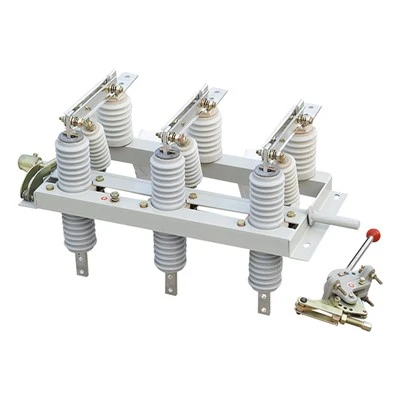
It’s a fair question. When a grid component fails, the stakes are enormous. A 2022 report from the North American Electric Reliability Corporation (NERC) noted that faults in distribution and transmission infrastructure cost U.S. consumers an estimated $150 billion annually in lost productivity, spoiled goods, and repair time. Fuses are first responders to these faults, designed to break a circuit in milliseconds to stop damage from spreading to transformers, lines, and expensive connected equipment. But their reliability isn’t a one-size-fits-all number—it depends on design, installation, maintenance, and the conditions they operate in. Let’s break this down like I would with a customer sitting across my desk, no overly technical jargon, just straight talk about what makes a high-voltage fuse work, when it works, and when it doesn’t.
First, let’s start with what a high-voltage fuse actually does. Unlike low-voltage fuses in your home’s breaker box, high-voltage fuses are built to handle 1,000 volts and up—some transmission-grade units top out at 138,000 volts or more. Their core job is deceptively simple: carry normal current for years, then blow (melt their internal fuse element) instantly when an overcurrent or short circuit hits. The key metric for reliability here is something called “mean time to failure” (MTTF), but that number only tells part of the story. A typical distribution-class high-voltage fuse, the kind you see mounted on wooden poles in residential areas, has an MTTF of 15 to 20 years when installed and maintained correctly. But that number drops drastically if they’re exposed to things they weren’t designed for.
Let’s talk about design first, because that’s the foundation of reliability. Not all high-voltage fuses are the same, and cutting corners here is a quick way to end up with a unit that fails when you need it most. The fuse element, usually a thin strip of silver or copper, is the heart of the fuse. High quality fuses use a uniform, calibrated element that melts at a precise current threshold. Cheap fuses often have inconsistent element thickness, so some areas melt too early and others too late—leading to nuisance tripping or failure to blow when needed. Then there’s the arc quenching material. When a fuse blows, it doesn’t just break the circuit with a melting element—it has to extinguish the electric arc that forms, which can reach temperatures of 35,000 degrees Fahrenheit, hotter than the surface of the sun. Most modern high-voltage fuses use sand or a specialty polymer compound called urea carbonate as the arc quenching medium. Lower quality fuses use plain sand with high moisture content, which can break down over time, reducing their ability to extinguish arcs.
I remember a customer I met at a utility conference a few years back—we’ll call him Tom, a maintenance manager for a midwestern rural utility. He told me they’d been buying cheap fuses from a overseas supplier to cut costs, and over two years, they’d had seven unplanned outages caused by fuses that failed to blow during short circuits, leading to $200,000 in transformer damage. When we tested the fuses he had in stock, we found their arc quenching material was 12% moisture by weight, vs. our fuses which came in at less than 0.5%. That’s the difference between a fuse that works when you need it and one that becomes a ticking time bomb.
Next, installation and maintenance, two factors that are often overlooked but make up 70% of a fuse’s real-world reliability. I’ve seen perfectly good fuses installed wrong, and perfect installations ruined by poor maintenance. For example, a high-voltage fuse has to be torqued to exact specifications when mounted—too loose, and you get a loose connection that generates heat, which can cause the element to weaken and fail early, or even melt accidentally during normal operation. Too tight, and you can crack the fuse’s ceramic housing, letting moisture and contaminants get inside.
Then there’s maintenance. Most utilities and industrial teams check their high-voltage fuses during annual grid inspections, but not all checks are created equal. A visual inspection only tells you if the fuse housing is cracked or dirty. You need to do a contact resistance test, which measures how well the fuse is carrying current. If resistance is too high, that’s a sign of wear or corrosion, and the fuse needs to be replaced before it fails unexpectedly. I worked with a food processing plant in the Southeast a few years ago that lost an entire batch of frozen pizza dough during a heatwave when a fuse on their backup power transformer failed to blow. When we looked at their records, they’d been doing visual inspections, but never resistance tests— the fuse’s internal elements had corroded over three years, and no one noticed.
Environmental conditions are another big factor that impacts fuse reliability. High-voltage fuses are built to withstand harsh weather, but extremes test their limits. Coastal areas with salt air, for example, cause corrosion on metal parts much faster than inland areas. Fuses installed near industrial sites with heavy dust or chemical fumes can have their arc quenching material clogged with contaminants, reducing performance. Temperature swings matter too—extreme heat speeds up the aging of the fuse element and the sealing around the housing, while extreme cold can make some materials brittle, leading to cracks. I had a customer in Alaska call me last winter because three of their fuses had cracked during a cold snap that dropped to minus 40 degrees Fahrenheit. It turned out they had been using standard distribution-class fuses instead of cold-weather rated models, which are built with more flexible sealing materials.
Now, let’s get to the numbers, because data is what separates anecdotes from real reliability. A 2021 study published in the IEEE Transactions on Power Delivery looked at 12,000 high-voltage fuses from 15 different suppliers, tracked over 10 years. The study found that fuses from reputable manufacturers had a failure rate of less than 0.2% per year—meaning fewer than 2 out of 1,000 fuses would fail unexpectedly during their 20-year design life. The fuses from the lowest-cost suppliers in the study had a failure rate of over 2.1% per year—more than 10 times higher. The most common failure modes for reliable fuses were not the fuse element itself, but damage from external causes: lightning strikes, physical impact, or improper installation. For low-quality fuses, the most common failure was the element failing to blow during a short circuit, or blowing accidentally during normal operation.
Wait, that’s an important point—reliability isn’t just about not failing when you need it. It’s also about not failing when you don’t need it. Nuisance tripping, when a fuse blows for a small overcurrent that doesn’t damage equipment, causes unplanned outages that are just as costly as a fuse failing to blow. The same IEEE study found that reliable fuses had a nuisance tripping rate of less than 0.1% per year, while low-quality fuses had a rate of over 1.5% per year. For utilities, which have to coordinate re-closures and customer notifications after every outage, that adds up to millions in extra labor costs annually.
So, putting this all together, are high-voltage fuses reliable? The short answer is: when you buy high-quality units from a reputable supplier, install them correctly, maintain them regularly, and match them to the operating environment, they are extremely reliable—one of the most reliable components in the entire electrical grid. When you cut corners on design, installation, or maintenance, they become a major risk.
Let me share a recent example to drive this home. Last year, a utility in the Pacific Northwest reached out to us because they were updating 50 miles of distribution lines, replacing fuses from three different overseas suppliers that had caused 12 outages in the prior two years. We worked with their engineering team to select fuses rated for their local environment—coastal, with salt exposure, so we used fuses with a corrosion-resistant metal housing and hermetically sealed ceramic housings to keep moisture out. We provided installation training to their line crews, including torque specifications and how to inspect for cracking during mounting. We also set them up with a scheduled maintenance program, where we perform annual resistance testing on all fuses, replacing any that show wear. Six months in, their outage data shows zero fuse-related outages. That’s the difference between a component that works for you, and one that works against you.
As a high-voltage fuse supplier, I see this all the time. Customers come to me asking for the cheapest fuses, and I always explain the tradeoff. The $5 fuse that costs half as much as our $10 fuse might save you a few dollars upfront, but if it causes an outage that costs $100,000 or more, that’s a terrible investment. Reliability in fuses isn’t about magic—it’s about calibrated elements, quality arc quenching material, proper sealing, and support from a supplier that stands behind their products.
If you’re working on a new grid project, upgrading existing infrastructure, or dealing with frequent fuse-related outages, I’d be happy to walk you through the best options for your specific needs. Whether you’re a utility with hundreds of miles of lines, an industrial plant with a large transformer setup, or a municipal team maintaining local power, we can help you select the right fuses, install them correctly, and set up a maintenance plan that keeps your system reliable for years to come. Don’t let cheap parts put your operations at risk. Reach out to discuss your project today.
High and Low Voltage Switchgear References
North American Electric Reliability Corporation (NERC). (2022). 2022 Grid Reliability Cost Assessment. North American Electric Reliability Corporation.
IEEE Power & Energy Society. (2021). Failure Analysis of High-Voltage Distribution Fuses: A 10-Year Field Study. IEEE Transactions on Power Delivery, 36(4), 2217-2225.
U.S. Energy Information Administration (EIA). (2020). Distribution Infrastructure Performance and Reliability. U.S. Department of Energy.
Zhongtai Electric Power Technology Co., Ltd.
With abundant experience, we are one of the most professional high-voltage fuse manufacturers and suppliers in China. We warmly welcome you to wholesale bulk customized high-voltage fuse from our factory. If you have any enquiry about quotation, please feel free to email us.
Address: High-tech Industrial Park, Chongren County, Fuzhou City, Jiangxi Province (No. 261 Yingbin Avenue)
E-mail: info@zhongtaielectric.com
WebSite: https://www.zhongtaipower.com/
