Hey guys, if you’re reading this, chances are you’ve got a sound problem to fix—whether it’s a booming home theater that’s annoying the downstairs neighbors, a workshop where the power tools are driving everyone on the block crazy, or a commercial space like a restaurant or office where echo is making it hard to hold a conversation. And let’s be real, you’ve probably stumbled upon Mass Loaded Vinyl (MLV) as a solution, but with so many options out there, you’re probably thinking: “Which the heck one do I actually need?” As someone who’s been selling MLV for over 8 years now (yeah, I’ve seen it all—from DIYers who messed up their first project to contractors who needed a last-minute fix for a big commercial job), I’m here to cut through the jargon and help you pick the right stuff without wasting your time or cash. Mass Loaded Vinyl
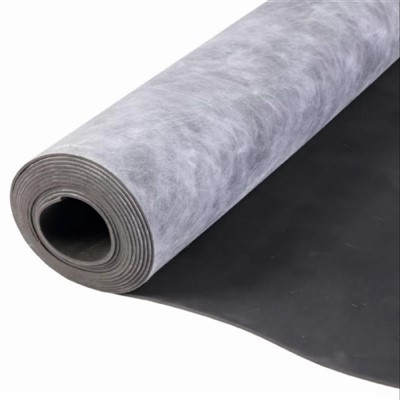
First off, let’s get one thing straight: not all MLV is created equal. I’ve had customers come in saying “I bought the cheapest MLV off Amazon and it didn’t work—what gives?” Well, MLV’s whole thing is its mass, right? Mass is how sound waves are stopped—dense materials block more noise. But it’s not just about how heavy it is; it’s about what it’s made of, how it’s applied, and what your specific noise problem actually is. Let’s break this down step by step, no confusing terms, I promise.
First, figure out what kind of noise you’re dealing with. That’s the most important step. Because if you’re mixing up airborne noise vs. impact noise, you’ll pick the wrong MLV every time. Airborne noise is the stuff you hear through the air—talking, music, TV, cars, airplanes. Impact noise is the thudding—footsteps on a wood floor, a cabinet slamming, a workshop machine vibrating. MLV is great for airborne noise, but it’s not the end-all for impact noise (though some types work better for both, depending on the make). Let’s say, for example, a customer named Mike came to me last year—he had a home theater in his basement, and his neighbor upstairs kept complaining about bass. He bought super thin MLV, put it on the walls, and still heard the bass. Turns out, he was using the wrong weight, and didn’t pair it with resilient channels (but that’s a side note—we’ll get to that). Another customer, Lisa, runs a hair salon on the first floor of a two-story building; her upstairs tenant kept hearing clients talking, so she needed something for airborne speech. That’s a different scenario than if she was dealing with a bouncy floor from stylists’ feet.
Next up, the weight per square foot. This is the big one, and it’s where most people go wrong. MLV comes in weights from ¼ lb/sq ft all the way up to 1 lb/sq ft. Here’s the rule of thumb I give everyone: the higher the weight, the better the noise reduction—usually. But you don’t want to overdo it, because heavier MLV is stiffer, harder to work with, and more expensive. For small, DIY projects like a closet barrier for a home theater, ¼ lb might work if you’re adding it to existing drywall. But for walls that are carrying a lot of noise—like a workshop wall that’s next to a bedroom—you’ll want at least ½ lb, maybe ⅝ lb. Wait, but don’t just take my word for it—remember the mass law in acoustics: the sound transmission class (STC) rating goes up by about 5 points for every doubling of mass. So if a ¼ lb MLV on drywall gives you an STC of 35, a ½ lb would get you around 40, and a 1 lb would be closer to 45. For commercial spaces, you might need STC 50 or higher, so you’d pair a heavier MLV with resilient channels and double drywall, but that’s part of the installation, not just the MLV itself. A few months back, a contractor named Jake called me panicking—he had a office building project that required STC 52, and he thought a ½ lb MLV would do it. I told him he needed a ⅝ lb, plus resilient channels, and he ended up getting exactly what he needed without having to reorder last minute. Pro tip: if you’re not sure what weight to get, send me the details (what room it is, what noise you’re blocking, existing walls/floors) and I’ll point you in the right direction—no pressure, just good advice.
Then, what’s the MLV made of? Most MLV is a blend of recycled rubber and plastic, right? But some cheaper brands cut corners with fillers like chalk, which makes it brittle, crack easily, and lose its noise reduction over time. I had a customer named Sarah who bought a no-name MLV from a big box store for her laundry room; within a year, it started splitting at the seams, and she had to replace it. Our MLV is made with 85% recycled rubber and only a small amount of plastic—so it’s flexible, durable, and the mass stays consistent. That flexibility is also important for installation—if you’re wrapping it around pipes or fitting it into tight spaces, flexible MLV is way easier to work with than stiff, chalk-filled stuff. Also, check if it’s flame-resistant, especially if you’re using it in a commercial kitchen, a basement with a furnace, or a home near a fireplace. Our MLV meets fire safety standards, which is non-negotiable for a lot of building codes—don’t get stuck with a product that’s not up to code and has to be ripped out.
Wait, another thing: do you need closed-cell MLV? No, not unless you’re dealing with moisture. If you’re using it in a bathroom, a basement that gets damp, or a mechanical room with pipes, closed-cell MLV is water-resistant, so it won’t get moldy or warp. But if it’s a dry room like a home theater or office, open-cell MLV is fine, and it’s a bit more flexible for fitting around corners. I always tell customers to ask about the moisture resistance if their project is in a space that might get wet—saves you from a headache later.
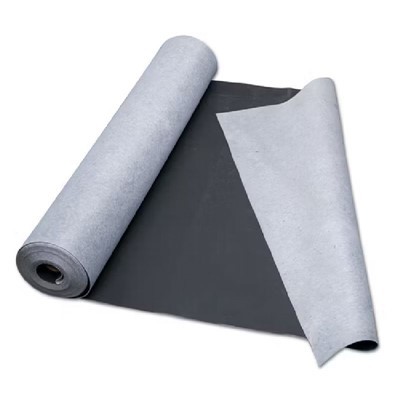
Also, think about installation. No matter how good your MLV is, if you install it wrong, it won’t work. But some MLV is designed for easier installation. For example, we offer MLV with self-adhesive backing for small jobs like patching gaps around doors or windows—no need to buy extra adhesive. For bigger jobs like walls, we sell MLV in rolls that are 4 feet wide, which fits perfectly between standard stud spacing (which is usually 16 or 24 inches on center) so you don’t have to cut it down as much. A lot of customers don’t realize that cutting MLV is manageable, but wide rolls save time. Also, don’t forget that MLV needs to be airtight—any gaps, and sound will leak right through. That’s why we recommend using aluminum foil tape to seal all seams, not duct tape (duct tape falls apart over time). I’ve seen DIYers skip the sealing and wonder why their noise reduction was terrible—don’t be that guy.
Let’s talk about common projects to make this concrete (pun intended). If you’re a homeowner building a home theater: I’d go with ½ lb/sq ft open-cell MLV, paired with resilient channels on the walls (instead of attaching drywall straight to studs) to add extra sound damping. The MLV goes between the channels and the drywall, sealing all seams. If you’re fixing a noisy bedroom next to a kids’ playroom: ⅝ lb MLV, same installation—resilient channels help break up sound transfer. For a commercial restaurant: you might need STC 50 or higher, so you’d use ⅝ lb or 1 lb MLV with double drywall and resilient channels between spaces. For a floor: if you’re covering a wood floor to reduce impact noise (footsteps), you can lay MLV under a new layer of subfloor or carpet—look for a ¼ lb to ½ lb, since it’s under the floor, not on a wall. Wait, but for impact noise, MLV works best with a layer of insulation on top, right? That’s another tip—don’t just rely on MLV alone, pair it with other sound-dampening materials for best results.
I also want to mention a mistake I see all the time: buying MLV that’s too thin because it’s cheaper. Yeah, a ¼ lb roll is less expensive upfront, but if it doesn’t work, you’ll have to buy the right one anyway, and you wasted time and money. I always tell customers to calculate the total cost, not just the per-square-foot price. For example, a ½ lb roll is 20% more expensive than a ¼ lb, but it will give you 50% better noise reduction, so it’s a better long-term investment. Plus, our MLV has a 10-year warranty—most of the cheap stuff doesn’t have any warranty, so if it fails, you’re on your own.
Another question I get: can I use MLV outside? Short answer: some types, but not the standard indoor MLV. If you need outdoor MLV, it has to be UV-resistant, because sun exposure will break down regular rubber-plastic blends. We sell a heavy-duty, UV-stabilized MLV for outdoor projects like enclosing a patio or covering an outdoor equipment shed—just make sure it’s installed with proper drainage so water doesn’t pool on it.
Let’s recap the key points to choose the right MLV:
- Know your noise type: airborne (speech, music) vs. impact (footsteps, thuds) – MLV works best for airborne, pair with insulation for impact.
- Pick the right weight: ¼ lb for small dry spaces, ½ lb for standard residential, ⅝ lb+ for heavy noise or commercial.
- Check the material: avoid chalk-filled cheap stuff, go for recycled rubber blends that are flexible and durable.
- Factor in environment: closed-cell if moisture is an issue, UV-stabilized if outdoor, flame-resistant for code compliance.
- Don’t skip installation: seal seams, use resilient channels where needed, airtight is key.
PET Acoustic Panels At the end of the day, there’s no one-size-fits-all MLV, but if you follow these steps, you won’t be making a mistake. If you’re still stuck—whether you’re measuring your space, figuring out what weight you need, or have questions about installation—don’t hesitate to reach out. We’ve helped hundreds of customers, from first-time DIYers to big contractors, get exactly the right MLV for their project, and we’ll give you honest advice even if you end up buying from someone else (though we’d love to have your business). No pressure, no salesy tricks, just real help for real noise problems.
References
- Beranek, L. L., & Ver, I. L. (1992). Noise and Vibration Control Engineering: Principles and Applications. John Wiley & Sons.
- Acoustical Society of America. (2013). ANSI/ASA S12.60-2013: Acoustical Performance Criteria, Design Requirements, and Guidelines for Schools.
- Mass Loaded Vinyl Industry Standards. (2021). Recycled Rubber Composite Products Association.
- National Fire Protection Association. (2020). NFPA 70: National Electrical Code.
- Practical Soundproofing for Homes. (2019). Home Acoustics Alliance.
Guangzhou MQ Acoustic Materials Co., Ltd.
Guangzhou MQ Acoustic Materials Co., Ltd. is one of the most professional mass loaded vinyl manufacturers and suppliers in China, featured by quality products and low price. Welcome to buy CE approved mass loaded vinyl in stock here and get quotation from our factory. We also accept customized orders.
Address: Room D403, KeZhu Business Building, ZhuJi Road, TianHe District, GuangZhou, China
E-mail: Lizzy@mq-acoustics.com
WebSite: https://www.acoustic-projects.com/
