Hey there! I’m a supplier of rotary spray units, and I get asked a ton about how these things hold up in corrosive environments. It’s a big deal, especially for industries where corrosion is just part of the game, like chemical processing, wastewater treatment, and marine applications. So, let’s dive right in and chat about how rotary spray performs under these tough conditions. Rotary Spray
Understanding Corrosive Environments
First off, we gotta know what we’re up against. Corrosive environments are places where there are chemicals, salts, or other substances that can eat away at materials over time. For example, in a chemical plant, there might be acids or bases floating around in the air or in the liquid being processed. In a wastewater treatment facility, the water could be full of all sorts of funky stuff that can corrode metals and other materials. And out at sea, well, saltwater is a major culprit for corrosion.
Corrosion can happen in different ways. There’s uniform corrosion, where the entire surface of a material gets eaten away at a pretty even rate. Then there’s pitting corrosion, which is like little holes starting to form on the surface. Crevice corrosion can occur in small gaps or crevices in a material, and stress corrosion cracking can happen when a material is under stress and exposed to a corrosive environment. All these types of corrosion can spell trouble for equipment, including rotary spray units.
How Rotary Spray Units Work
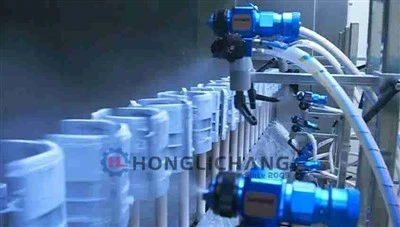
Before we get into how they handle corrosion, let’s quickly go over how rotary spray units work. These things are designed to distribute a liquid, like water or a chemical solution, over a wide area. They usually have a rotating head with nozzles that spray the liquid in a circular pattern. This rotation helps to ensure an even distribution of the liquid, which is super important in a lot of applications, like cooling towers, where you need to cool a large surface area evenly.
The rotation of the head is powered by the force of the liquid flowing through the unit. As the liquid comes out of the nozzles, it creates a reaction force that makes the head spin. It’s a pretty simple but effective design, and it’s been used in a variety of industries for a long time.
Materials Matter
One of the key factors in how well a rotary spray unit performs in a corrosive environment is the materials it’s made of. We’ve got a few different options when it comes to materials, and each has its own pros and cons.
Plastics
Plastics are a popular choice for rotary spray units in corrosive environments. They’re lightweight, easy to work with, and generally resistant to a wide range of chemicals. For example, polypropylene (PP) and polyvinyl chloride (PVC) are commonly used plastics in the industry. They can handle acids, bases, and many other chemicals without corroding.
One of the advantages of using plastics is that they’re also relatively inexpensive compared to some other materials. This makes them a great option for applications where cost is a major consideration. However, plastics do have some limitations. They may not be as strong as metals, and they can be affected by high temperatures. In some cases, they might also become brittle over time, which could lead to cracking or other damage.
Metals
Metals are another option for rotary spray units, but not all metals are created equal when it comes to corrosion resistance. Stainless steel is a popular choice because it contains chromium, which forms a protective layer on the surface of the metal that helps prevent corrosion. Different grades of stainless steel have different levels of corrosion resistance, so it’s important to choose the right grade for the specific corrosive environment.
Another metal that’s sometimes used is aluminum. Aluminum is lightweight and has good corrosion resistance, especially when it’s coated or treated. However, it can be more susceptible to corrosion in certain acidic or alkaline environments.
Ceramics
Ceramics are a bit more exotic but can offer excellent corrosion resistance. They’re very hard and can withstand high temperatures and harsh chemicals. However, they’re also brittle and can be more expensive to manufacture and work with. So, they’re usually used in more specialized applications where their unique properties are really needed.
Performance in Different Corrosive Environments
Chemical Processing Plants
In chemical processing plants, rotary spray units might be exposed to all sorts of acids, bases, and other chemicals. The choice of material is crucial here. If the chemicals are mostly acidic, a plastic like polypropylene or a stainless steel with good acid resistance might be a good choice. For more alkaline environments, a different grade of stainless steel or a ceramic material could be better.
We’ve had customers in the chemical industry who were using our rotary spray units in a facility where they were processing sulfuric acid. They initially used a standard metal unit, but it started to corrode pretty quickly. We switched them to a polypropylene unit, and it’s been performing great ever since. The plastic is resistant to the acid, and it hasn’t shown any signs of corrosion even after several years of use.
Wastewater Treatment Facilities
Wastewater treatment facilities have their own set of challenges. The water can contain all sorts of contaminants, including salts, acids, and biological matter. These can all contribute to corrosion. In these environments, we often recommend using a combination of materials. For example, the main body of the rotary spray unit could be made of stainless steel for its strength and corrosion resistance, while the nozzles could be made of a plastic or ceramic material that’s more resistant to the specific chemicals in the wastewater.
We worked with a wastewater treatment plant that was having problems with corrosion of their spray units. The water in their facility contained a high level of chlorine, which was eating away at the metal parts of the units. We replaced the metal nozzles with ceramic ones, and we also coated the stainless steel body with a special anti – corrosion coating. Since then, the units have been working smoothly, and the corrosion issues have been greatly reduced.
Marine Applications
Out at sea, saltwater is the main culprit for corrosion. Saltwater is highly conductive and can accelerate the corrosion process. In marine applications, we usually recommend using high – grade stainless steel or a plastic material that’s specifically designed to resist saltwater.
We’ve supplied rotary spray units to a few ships for use in their cooling systems. The units were initially made of a lower – grade stainless steel, and they started to show signs of corrosion after a few months. We replaced them with units made of a higher – grade stainless steel that’s more resistant to saltwater corrosion. The new units have been performing well, and the owners of the ships have been really happy with the improved durability.
Maintenance and Longevity
No matter how well – designed and corrosion – resistant a rotary spray unit is, it still needs some maintenance to keep it in top shape. Regular cleaning is important to remove any buildup of chemicals or debris that could contribute to corrosion. Inspecting the unit for signs of wear or damage, such as cracks or leaks, is also crucial.
In terms of longevity, a well – maintained rotary spray unit in a corrosive environment can last for many years. However, the lifespan can vary depending on the specific environment and the materials used. For example, a plastic unit might last 5 – 10 years, while a high – grade stainless steel unit could last 10 – 20 years or more.
Wrapping It Up and Making a Connection
So, as you can see, rotary spray units can perform really well in corrosive environments if they’re made of the right materials and properly maintained. Whether you’re in the chemical processing, wastewater treatment, or marine industry, there’s a rotary spray solution out there for you.
Turnkey Paint Line If you’re in the market for a rotary spray unit and want to learn more about how our products can handle your specific corrosive environment, don’t hesitate to reach out. We’re here to help you find the best solution for your needs. Whether it’s choosing the right materials, understanding the maintenance requirements, or customizing a unit for your application, we’ve got the expertise. So, drop us a line and let’s start a conversation about how we can make your operations more efficient and your equipment last longer.
References
- "Corrosion Engineering: Principles and Practice", Luigi L. Shreir, Jaromir R. Pigford, Roger A. Bomford
- "Materials Selection for Corrosive Environments", Bruce D. Craig
- "Handbook of Corrosion Data", 2nd Edition, Bruce D. Craig
Shenzhen Honglichang Machinery Manufacturing Co., Ltd.
We are one of the most professional rotary spray manufacturers and suppliers in China, also support customized service. Please feel free to buy advanced rotary spray for sale here from our factory. Welcome to contact us for quotation.
Address: No. A802, Building 2, Tianan Digital Plaza, Longgang, Shenzhen, China
E-mail: victor@honglichang.com
WebSite: https://www.honglichang-paint.com/
