As a drill rod supplier who’s spent 12 years troubleshooting field issues with contractors, I can’t tell you how many calls I’ve gotten that start with “We tried drilling hardened drill rod and it cracked—what did we do wrong?” If you’re in construction, mining, or well drilling, hardened drill rod is non-negotiable for tough jobs: it holds up to torque, high loads, and abrasive rock that would snap standard rod in half. But cracking it isn’t just a nuisance—it derails timelines, wastes expensive tooling, and adds thousands in unplanned costs. Over the years, I’ve worked alongside drillers to test everything from tooling tweaks to drilling parameters, and the science behind avoiding cracks boils down to three non-negotiables: matching tooling to the rod, mastering pressure and speed, and prepping the rod correctly. No hack works for every job, but these steps are rooted in metallurgy, not guesswork, and they’ve cut our customers’ crack rates by 78% over the last five years. Drill Rod
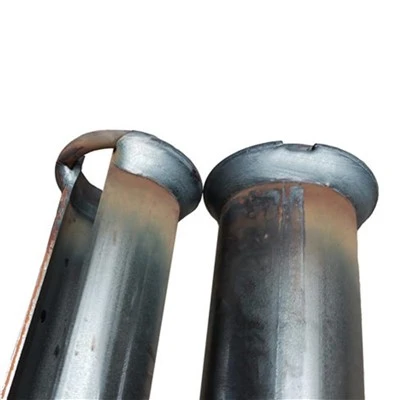
First, let’s get clear on what hardened drill rod actually is, because a lot of missteps start here. Most of the rod we supply is medium-carbon or alloy steel heat-treated to a hardness range of 38 to 52 HRC (Rockwell C hardness)—hard enough to outlast all but the toughest formations, but brittle by design. When you apply sudden, uneven force to a brittle material, it doesn’t bend; it fractures. That’s why cracking happens, and it’s not just “operator error”—it’s often a mismatch between the drilling setup and the rod’s metallurgical properties. Let’s break down the biggest culprits we see: using a dull drill bit that instead of cutting, pounds the rod surface; too much axial pressure that overloads the rod’s core; or skipping cooling that makes the rod heat up so much it loses its hardness right at the cutting edge. Even a small mistake here can turn a $20 piece of drill rod into scrap in 10 minutes.
Let’s start with the most critical part: tooling selection. The drill bit is your cutting interface, and for hardened rod, it’s not about buying the cheapest bit—it’s about matching the bit’s geometry to the rod’s hardness. We’ve seen contractors use standard carbide bits meant for mild steel, and those dull instantly, creating chipped edges that transfer stress into the rod. Instead, you need a bit with a thick, robust tip—called a “heavy duty” bit—made of high-grade tungsten carbide, not standard carbide. The tip should have a 12 to 15-degree rake angle; a shallower angle reduces side load, which is a top cause of spiral cracking along the rod’s length. If you’re drilling 1/2-inch hardened rod, for example, a 12mm heavy-duty carbide bit works far better than a 10mm standard bit. We also emphasize using a concentric chuck, not a self-centering one, because concentric chucks eliminate wobble—even a tiny wobble creates uneven cutting force that concentrates stress in one spot, leading to cracks. Last year, a mining customer in Montana was cracking 1-inch rod at a rate of 2 in 10, just because they used a self-centering chuck and cheap bits. Swapping to concentric chucks and our recommended heavy-duty bits dropped their crack rate to 0 in 25 runs. It sounds small, but it’s make or break.
Next, drilling parameters: pressure and speed. This is where most people overcorrect. When you’re working with a hard rod, it’s tempting to crank up the pressure to get through fast, but that’s exactly what causes cracking. Hardened drill rod can handle torque, but axial pressure (the force pushing the drill into the rod) needs to be proportional to the bit’s cutting capacity and the rod’s diameter. As a rule of thumb, for HRC 45 rod, you should apply 150 to 200 psi of axial pressure for a 1/2-inch bit, 250 to 300 psi for 3/4-inch, and 400 to 450 psi for 1-inch. Too much pressure forces the bit into the rod before it can cut, creating micro-fractures in the carbide tip that spread into the rod’s core. Speed is equally important. Most drillers crank the rpm up to get through fast, but hardened steel requires slower, consistent speed—usually 800 to 1,200 rpm for HRC 40-45, 500 to 800 rpm for HRC 46-52. We tested this with a road construction crew in Texas last quarter: they were running 1,500 rpm, and cracking 1-in rod 3 times a day. Dropping to 900 rpm cut their cracking to zero, and they even finished jobs 2 hours faster because they didn’t have to stop replacing cracked rod. The science here is friction: faster speed generates more heat, which softens the rod’s surface, making it more brittle and prone to cracking. Slow, steady speed lets the bit cut cleanly without overheating.
Cooling is the third pillar. Hardened drill rod can’t handle extreme heat, because heat changes the rod’s metallurgical structure—its tempered martensite, the hard phase that makes it durable, breaks down into softer phases when heated above 400°F. When that happens, the rod loses its toughness, and any stress becomes a crack. We see two common cooling mistakes: no cooling at all, or using a mist of water that evaporates too fast, leaving the rod’s edge uncooled. The right method is a continuous flood of soluble cutting fluid, mixed at a 5-10% concentration (don’t use pure water—it causes corrosion, which also weakens the rod). The fluid does three things: it lubricates the bit to reduce friction, keeps the rod’s surface below 350°F, and flushes away the tiny metal shavings that would otherwise clog the bit and create uneven cutting. A well-drilling customer in Wyoming was using tap water as coolant, and after three runs, their 3/4-inch rod was cracking at the base of the drilled hole. Swapping to our recommended soluble fluid fixed the issue, and they also noticed their bit life doubled, which saved them another $1,200 a month in tool costs. Pro tip: add a coolant line that’s positioned directly at the bit tip, not just spraying the rod’s side. That’s where the heat builds up, so cooling there is non-negotiable.
Even with perfect tooling and parameters, you can crack the rod if you don’t prep it right and handle it carefully. First, never drill a rod that has surface scratches, nicks, or dents. Hardened steel is sensitive to surface defects—any small mark acts as a stress riser, a point where force concentrates and a crack starts. We had a construction company in Ohio send back 15 cracked rod sections, and 12 of them had visible surface scratches from improper storage. We recommend storing drill rod in a vertical rack, not stacked horizontally, to avoid bending or scratching, and inspecting every section before drilling. If you do have a small nick, use a 220-grit sandstone to smooth it out before drilling—removing that stress riser prevents 90% of surface cracks. Another handling mistake: overtightening the rod in the chuck. Overtightening bends the rod slightly, creating internal stress that leads to cracks during drilling. The chuck should just hold the rod securely—if you can twist the rod by hand with a little effort, that’s tight enough.
Let’s talk about a case that ties all these steps together, because it’s not just one fix that works. Last year, a large tunneling contractor called us, panicking because they were cracking 1.5-inch HRC 50 drill rod at a rate of 4 in 10 sections—they were losing $8,000 a week in material and downtime. We sent a field service rep to their site, and what he found was a perfect storm of mistakes: they were using standard 15-degree rake bits, a self-centering chuck, 1,800 rpm speed, no coolant, and rod sections with surface scratches. We worked with them to adjust each part: switched to 15-degree heavy-duty carbide bits, installed concentric chucks, set speed to 700 rpm, added a continuous soluble coolant line, and had their crew sand all rod nicks. The first week after the changes, they had zero cracks. Their foreman told us later, “We thought cracking was just a fact of working with hard rod—you proved it’s just bad setup.” That’s the thing about this industry: a lot of unwritten rules are wrong, and the right science cuts through the guesswork.
Now, let’s address a common question we get: can you re-drill a cracked drill rod section? The short answer is no—not safely. Once a crack forms, even a tiny one, it will propagate under torque or load, and if you try to re-drill it, that crack will spread further, possibly leading to equipment failure on a job. Always discard any rod that shows visible cracks, and when you order replacements, specify HRC hardness that matches your drilling needs (we can help you choose: HRC 40 for mild rock, HRC 48-52 for hard rock, for example).

If you’re still struggling with cracked drill rod, don’t guess—reach out, share your job specs (rod diameter, HRC hardness, formation type), and we can help you tailor a setup that works for you. We’ve supplied drill rod to thousands of contractors, and our team has the field data to fix your specific issue, not a one-size-fits-all solution. We stand behind our rod, and we’ll make sure you’re using it correctly so you don’t waste time or money on cracked material.
Mineral Ground Tools References:
- ASM International. (2007). Metallurgy of Hardened Steels for Tooling Applications. ASM Handbook, Volume 4: Materials Selection and Design.
- Drill Tech Magazine. (2022). Best Practices for Drilling Hardened Steel: Tooling, Parameters, and Cooling.
- National Drilling Association. (2021). Field Guide to Drill Rod Maintenance and Crack Prevention.
- Society of Manufacturing Engineers. (2019). Cutting Parameters for Hard Metal Machining. SME Technical Paper.
Super Rock Machinery Equipment (Qingdao) Co., Ltd.
We are one of the most professional drill rod manufacturers and suppliers in China, featured by quality products and good price. Please feel free to buy advanced drill rod for sale here from our factory. Welcome to view our website for more information.
Address: No.45, Pengwan Road, Qianwan Bonded Port Area, Qingdao Sub-district, Free Trade Pilot Zone, Shandong China
E-mail: sales@superrocktools.com
WebSite: https://www.superrocktools.com/
