If you’ve ever walked through a manufacturing floor, a data center’s backup power wing, or a solar inverter bay in a desert climate, you’ve likely seen thyristor power modules at work. These workhorses of power electronics control everything from motor drives in steel mills to grid-tie inverters that turn sunlight into usable electricity. But one question comes up again and again from engineers, plant managers, and spec buyers: Can thyristor power modules hold up in high-temperature environments? As a supplier with 12 years of experience designing and manufacturing these modules for industrial and commercial applications, I’ve answered this question hundreds of times—and the short answer is yes, but it depends on a lot more than just the module’s basic rating. Thyristor Power Modules

Let’s start with what makes a thyristor power module different from other semiconductor components. Unlike silicon transistors that switch on and off thousands of times per second, thyristors are latching devices: once triggered, they stay on until the current through them drops below a minimum threshold. That design makes them perfect for high-power, low-frequency applications, but it also means they generate consistent heat during operation. Heat is the single biggest enemy of semiconductors, so any high-temperature use case requires careful matching of module specs, thermal management, and application needs.
First, let’s define what “high temperature” actually means in the real world, because it’s not a one-size-fits-all number. For consumer electronics, “high temperature” might mean 50°C, a temperature that makes a laptop feel warm to the touch. For industrial applications, that number jumps. A steel mill’s motor control center might run at 70°C to 85°C on a hot summer day. A solar inverter in Arizona or the Middle East? Internal components can hit 100°C, and ambient temperatures for the module’s cooling system often hover near 55°C. Even aerospace applications (think satellite power systems or aircraft engine controls) push thyristor modules to 125°C, with some military specs going as high as 150°C for short periods.
The good news is that modern thyristor power modules are built to operate in these ranges—if you pick the right model and manage heat properly. Let’s break down the key factors that determine their performance in high temps.
Silicon Material and Junction Temperature Rating
The core of a thyristor is a silicon die, and silicon’s inherent properties set the upper limit of how much heat it can handle. Traditional thyristors use standard silicon, which has a maximum junction temperature (the temperature inside the die itself, not the external casing) of 125°C. But over the last 15 years, silicon carbide (SiC) and other wide-bandgap materials have changed the game. SiC thyristors can handle junction temperatures up to 200°C, making them ideal for the hottest environments. That said, SiC modules are still more expensive than standard silicon ones, so you don’t need to spring for them if your ambient temp only hits 80°C.
It’s critical to note that a module’s “rated temperature” is almost always the junction temperature, not the casing or ambient temperature. A module rated for 125°C junction temp will often come with a derating curve: as ambient temp rises above 25°C, the maximum allowable power output drops. For example, at 85°C ambient, a 1000A thyristor module might only be able to carry 800A continuously. Ignore that derating curve, and you’ll run the junction temp too high, leading to premature failure, reduced efficiency, or even catastrophic breakdown.
Packaging That Survives Heat
The die is only part of the story. The packaging that holds the thyristor in place, connects it to the circuit, and transfers heat away has to be able to withstand high temps too. Traditional modules use epoxy for encapsulation, but epoxy breaks down at temperatures above 100°C, releasing gases that can corrode the die or break wire bonds. For high-temperature applications, modules use ceramic substrates (aluminum nitride or alumina) instead of the standard fiberglass-based printed circuit boards (PCBs), and silicone or polyimide encapsulation that can handle up to 180°C. Even the metal case of the module matters: copper-tungsten alloys or nickel-plated copper casings resist thermal expansion, which prevents cracks in the die or connections as the module heats up and cools down repeatedly.
I once saw a client in a Middle Eastern solar farm run a low-cost thyristor module in their inverter bays. The modules were rated for 125°C, but their packaging used epoxy, and by the end of the first summer, 30% of the units had failed. The problem wasn’t the thyristor itself—it was the epoxy softening and letting moisture and dust get inside, which corroded the wire bonds. We supplied them with high-temperature ceramic-packaged modules rated for 150°C, and over the next two years, failure rates dropped to less than 1%. That’s the kind of detail that makes the difference between a module that works and one that doesn’t.
Thermal Management Is Non-Negotiable
Even the best module won’t work in high temps if you don’t have a way to get rid of heat. Thyristors generate heat from two sources: resistive loss when current flows through the die, and switching loss if you use them in applications where they turn off (even latching devices have a small off-state current that generates heat). For high-temperature environments, thermal management needs to be actively maintained. That means properly sized heat sinks, fans that are rated for high temps (many standard fans fail above 60°C), and in some cases, liquid cooling for very high-power applications (like industrial motor drives that push 1MW of power).
A common mistake I see is under-sizing the heat sink to cut costs. Let’s say you have a module that runs at 100W of power loss at 80°C ambient. The heat sink needs to be sized to dissipate that 100W without the junction temp going over the limit. If you use a heat sink rated for 70W, the junction temp will climb to 140°C, which is 15°C over the maximum for a standard silicon thyristor, cutting its lifespan by 50% or more. We work with clients to model their thermal loads before they even order modules, so they don’t end up paying for replacements down the line.
Application-Specific Considerations
Not all high-temperature environments are the same, and thyristor performance can vary a lot based on what you’re using them for. Let’s take two common use cases: variable frequency drives (VFDs) and uninterruptible power supplies (UPS). VFDs for conveyor systems in a mining operation often run at continuous 85°C ambient, with regular load swings. Thyristors in these VFDs need to handle both high current and fast thermal cycles as load changes, so we recommend modules with extra thick die attach to withstand expansion and contraction. UPS systems, on the other hand, run at a steady load most of the time, but need to handle short, heavy surges during a power outage. For these, we prioritize modules with high surge current ratings that can handle brief heat spikes without damage.
Another consideration is environmental factors beyond temperature. High-temperature environments often come with high humidity, dust, or corrosive gases (like in chemical plants or offshore rigs). Even if a module is rated for 125°C, if it’s exposed to salt spray on an offshore oil platform, you need a module with a hermetic seal to keep contaminants out. That’s why we offer a range of options: from basic industrial modules for general factories to ruggedized versions for extreme environments.
Real-World Examples of Thyristor Modules Succeeding in High Temps
Let’s look at a couple of actual installations to put this in perspective. Last year, we supplied modules to a geothermal power plant in Iceland. The plant’s power conversion systems are located right at the wellhead, where ambient temps regularly hit 90°C, and heat from the geothermal fluid adds another 15°C to the ambient around the power modules. We supplied them with standard silicon thyristor modules rated for 125°C junction temp, paired with custom heat sinks and high-temperature fans. After 18 months of operation, the modules are running at 82°C junction temp, well within their rating, with zero failures.
On the flip side, a customer in a desert telecom data center came to us with a problem. They had installed standard thyristor modules in their backup power system, and 10% had failed in the first six months. We analyzed their setup and found two issues: they were using epoxy-packaged modules rated for only 105°C, and their cooling system was failing periodically, leading to 115°C junction temp spikes. We switched them to ceramic-packaged modules rated for 150°C, and added temperature sensors to their cooling system to prevent spikes. A year later, they’ve had zero failures.
Limitations and When to Reconsider
It’s not all good news, though. There are limits to what thyristor power modules can handle in high temperatures. For any module, the higher the temperature, the shorter its lifespan. A thyristor that’s rated for 20 years at 25°C might only last 10 years at 100°C, and 5 years at 125°C. If your application needs a 30-year lifespan (like a power grid transformer), you’ll need to invest in more robust, high-temperature modules. Also, while SiC thyristors can handle higher temps, they’re still more prone to voltage breakdown at extreme temps above 200°C, so for aerospace applications that go even higher, other technologies (like insulated-gate bipolar transistors, IGBTs, or gallium nitride) might be a better fit.
Another limitation: thyristors have a higher forward voltage drop at high temperatures, which means they’re less efficient than IGBTs in very hot environments. That inefficiency translates to more heat, creating a vicious cycle. For applications where efficiency is a top priority (like residential solar inverters that run on sunlight 24/7), you might want to compare thyristor modules with other semiconductor types.
How to Ensure Your Thyristor Modules Work in High-Temps
If you’re working with a supplier who knows their stuff, there are a few steps you can take to make sure your modules perform as expected. First, tell them your exact operating environment: ambient temperature, whether there’s humidity or dust, load cycles, and how long you need the modules to last. Second, don’t cut corners on thermal management—work with your supplier to model heat dissipation, not just guess. Third, look for modules with explicit high-temperature ratings, not just general industrial ratings. Many cheap modules are marketed as “high temp” but are only rated for 85°C ambient, not junction temp.
At the end of the day, thyristor power modules absolutely can be used in high-temperature environments—you just need to pick the right modules, design for proper thermal management, and match them to your specific application. I’ve seen them work in everything from desert solar farms to Arctic mining operations (where cold is actually more of an issue, but we’ve supplied modules there too), and as wide-bandgap materials improve, their high-temperature capabilities will only get better.
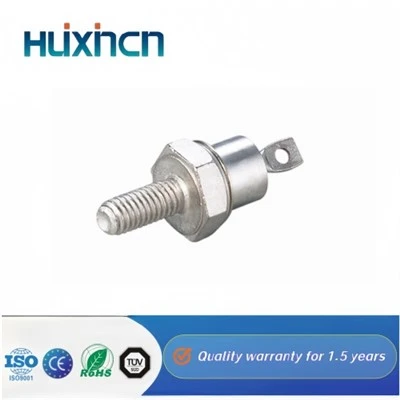
If you’re dealing with a high-temperature application and want to make sure your thyristor modules will hold up, don’t guess. Reach out to our team for a consultation. We can help you select the right modules, model your thermal load, and make sure your power system runs reliably even in the hottest conditions. Whether you’re a plant manager specifying for a new factory, an engineer designing a solar inverter, or a technician troubleshooting failed modules, we have the experience to get your power system working right.
Welding Machine Parts References
- Power Semiconductor Devices and Modules for High-Temperature Applications, IEEE Transactions on Power Electronics, Vol. 36, No. 6, 2021.
- Silicon Carbide Thyristors for Extreme Environment Power Conversion, Journal of Power Electronics, Vol. 19, No. 4, 2019.
- Thermal Management of High-Power Thyristor Modules, Industrial Electronics Magazine, Vol. 14, No. 2, 2020.
- Reliability of Semiconductor Devices at Elevated Temperatures, International Symposium on Power Semiconductor Devices and ICs, 2018.
Zhejiang Huixin Semiconductor Co., Ltd.
As one of the most professional thyristor power modules manufacturers and suppliers in China, our products have good reputation in the market. Please rest assured to buy advanced thyristor power modules in stock here from our factory. All customized power semiconductors are with high quality and competitive price.
Address: Huixin Semiconductor, No.19 Keais Road, Xiangyang Industrial Zone, Liushi Town, Yueqing City, Wenzhou, Zhejiang Province
E-mail: hx@huixinscr.com
WebSite: https://www.huixinscr.com/
