If you’ve ever stood in front of a Horizontal Machining Center (HMC) in a production shop, watched the spindle spin a solid carbide tool through a block of hardened steel, and wondered how that machine pulls off such reliable, heavy-duty cuts without stalling or losing precision—you’re asking the right question. As someone who’s spent the last 12 years selling, servicing, and refining HMCs for a living, the single most common question I get from new customers, machinists, and even engineering interns isn’t “How fast does your spindle spin?” It’s always “What is the torque of the spindle in a Horizontal Machining Center?” Horizontal Machining Center
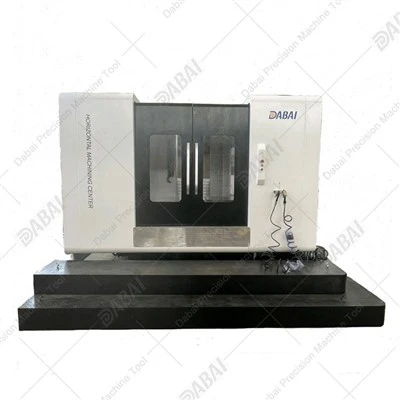
I get it. For anyone who’s run a CNC machine, or who depends on HMCs to keep production lines moving, torque isn’t just a number on a spec sheet. It’s the difference between cutting a custom aerospace part on time versus burning up a $500 tool and ruining a weeks-long order. It’s what separates a machine that can handle roughing a large mold from one that’s only built for light finishing passes. Today, I’m breaking this down simply, with real-world context, and laying out what torque actually means for your HMC, how we design ours to deliver consistent torque when you need it, and what to look for when evaluating your next machining center.
Let’s start with the basics, no textbook jargon. Torque, in the simplest terms, is rotational force. If you push on the end of a wrench to loosen a bolt, that’s torque applied in a linear direction, rotated around the bolt’s axis. For an HMC spindle, it’s the force that spins the cutting tool around its own axis, right at the tool-workpiece interface. When you’re performing a roughing cut, where you’re removing 0.25 inches of material per pass at 20 inches per minute feed rate, you need that rotational force to be strong enough to push the tool through that material without slowing down, slipping, or bending the tool or the workpiece. If torque is too low, the spindle will stall, the tool will chatter, and your part will end up out of tolerance.
But here’s the thing most spec sheets won’t tell you: spindle torque isn’t a single number. It’s measured two ways, and both matter a lot. There’s peak torque, and there’s continuous torque. Peak torque is the short burst of force a spindle can deliver for 10 to 30 seconds—think of it like launching a car from a stop sign, it’s there to get the load moving. Continuous torque is the steady, consistent force the spindle can deliver for hours on end without overheating, losing power, or wearing out components. For most production machining, continuous torque is way more important than peak torque. If you’re running a 8-hour shift, cutting 16 hours a day, you don’t need a 10-second burst of torque to get the job done—you need that steady, reliable force to run all day, every day.
Now, let’s talk about how HMC spindle torque is different from vertical machining center (VMC) torque, because that’s another mistake I see buyers make all the time. HMCs are built for heavy, high-volume cuts that stay engaged for long periods, often with multiple tools working on different sides of a part in a single setup. The horizontal spindle orientation means the tool is sitting horizontally, so it has more access to the workpiece from multiple angles, but that also means the spindle has to handle more consistent, heavy loads than a typical VMC, which is often set up for lighter, single-sided cuts. Because of that, HMC spindles are built with larger motors, more robust gear systems, or in the case of high-end models, direct-drive motors, to deliver higher continuous torque than comparably sized VMC spindles. For example, a 40-taper HMC spindle will typically have 20 to 50% more continuous torque than a same-sized VMC spindle, and that’s not a random number—it’s designed to handle the heavy roughing cuts that are the bread and butter of horizontal machining.
Let’s put this in context with a real shop example, something I saw last month at a job shop in Detroit that runs three of our HMCs making engine blocks for a major automotive manufacturer. Their parts are gray iron, cut with a 1.5-inch face mill, roughing at 18 IPM feed rate, 0.2 inches depth of cut. Our HMC’s 40-taper spindle delivers 120 ft-lbs of continuous torque, and that’s exactly what they need. If they’d bought a comparable VMC, which only puts out 85 ft-lbs of continuous torque, they’d be running that cut at a slower feed rate, taking more passes, and losing an entire shift’s worth of production every week. That’s the tangible impact of spindle torque—not just a spec number, but real bottom-line dollars.
Now, let’s get into how spindle torque is calculated, for anyone who wants to do their own quick check, and understand why our HMCs are engineered to hit those numbers consistently. The formula for spindle torque is pretty straightforward: Torque (T) = (Horsepower (HP) x 5252) / Spindle Speed (RPM). So if you have an HMC spindle rated at 30 HP, at 1000 RPM, that’s (30 x 5252) / 1000 = 157.56 ft-lbs of torque. That’s the theoretical number, but there are big factors that change the actual torque you get in a real machine. First is spindle taper size. A 50-taper HMC spindle is larger, has a bigger motor, and can handle way more torque than a 40-taper spindle. 50-taper spindles typically deliver 200 to 400 ft-lbs of continuous torque, perfect for heavy roughing cuts on large workpieces like transmission cases or structural components.
Second is spindle design. Older HMCs used gear-driven spindles, where the motor’s power was transferred through a set of gears, which delivered lots of torque at lower RPMs. The downside? Gears have friction, so you lose power between the motor and the tool, and they need regular maintenance to avoid wear. Newer direct-drive HMC spindles (what we build on our mid- to high-line models) eliminate those gears, so almost all the motor’s power gets to the tool. That means you get higher continuous torque across a wider RPM range, less maintenance, and more consistent performance. The tradeoff is that direct-drive spindles aren’t ideal for ultra-high RPM finishing work, but for most production HMC applications—where you’re running cuts between 50 RPM and 5000 RPM—direct-drive gives you a huge torque advantage.
Third is the tool and material you’re cutting. Cutting a soft aluminum part at high speed needs almost no torque. Cutting hardened steel at low speed, removing a lot of material, needs maximum torque. That’s why torque curves matter. A good HMC spec sheet will show you a torque curve, not just a single number. The curve shows you how much torque the spindle delivers at every speed, so you can see exactly how much force you’ll have at 200 RPM for roughing versus 3000 RPM for finishing. A lot of cheap HMCs will put their peak torque at 0 RPM, meaning at 1000 RPM they’re only delivering half that number, but a quality HMC will maintain 80% or more of its peak torque across its entire working speed range.
Now, let’s talk about a common myth I hear all the time: more torque means a better HMC. That’s not true. Torque is important, but it’s only one part of the equation. If you’re making small medical parts out of titanium, you don’t need a 300 ft-lb torque spindle—you need a spindle that can spin at 15,000 RPM, hold tight tolerances, and have high accuracy. If you’re making large structural steel parts for construction equipment, low-end torque is way more important than high RPM. The trick is to match your HMC’s torque profile to your typical workload. A lot of first-time HMC buyers go for the largest, highest-torque spindle they can afford, only to find they’re using only 20% of that torque on their parts, and paying a 20-30% premium for a spindle they don’t need. That’s why we always start with a conversation about what you actually cut, not just what spec sheet numbers look good.
Let me also address another question I get all the time: how do I know if my current HMC’s spindle torque is enough? I see this all the time when service calls come in. A machinist will call complaining that their spindle stalls on heavy cuts, and when I check the spec sheet, their HMC only has 70 ft-lbs of continuous torque, and they’re trying to rough cut 2-inch thick steel with a 2-inch tool that needs 90 ft-lbs. It’s not a machine problem—it’s a mismatch between the machine’s torque and the work being done. To calculate how much torque you actually need for a cut, use this formula: Required Torque = (Cutting Force x Tool Radius) / 12. Cutting force varies by material—you can get standard numbers from tool manufacturers or machining handbooks, but as a rough guide, a 1.5-inch face mill cutting gray iron at 20 IPM needs about 80 ft-lbs of torque, while the same cut in hardened steel needs 150 ft-lbs. If your machine’s continuous torque is at least 10% higher than that required torque, you’re good. If it’s lower, you’ll see stalling, chatter, broken tools, and poor part quality.
Over the years, I’ve seen HMC technology evolve a lot when it comes to torque, and that’s driven by what shops actually need. 15 years ago, most HMC spindles were gear-driven, with torque only available at low RPMs, so you had to choose between heavy cuts and high speed. Now, with direct-drive and advanced motor technology, we can deliver high torque across a wide RPM range, which is why shops are getting more done in less time. One of our biggest clients, a aerospace parts manufacturer that runs 5 of our HMCs, increased their production of titanium landing gear components by 40% after switching from their old gear-driven HMCs to our new direct-drive models, because the torque was available at the higher RPMs they needed for titanium cuts.
But here’s the thing that stays the same, no matter how much technology changes: torque is only useful if it’s consistent. I’ve seen so many cheap HMCs that hit their peak torque in a test lab, but in a real production shop, they lose 20-30% of their torque after 6 months of use, because of worn gears, poor motor design, or loose spindle bearings. That’s why when we build our HMCs, we test every spindle for 1000 hours under full load before it leaves our factory. We run roughing cuts nonstop, monitor torque output minute by minute, and warranty the spindle’s continuous torque for 5 years, no exceptions. That’s not a marketing claim—we’ve stood by it for a decade, and it’s why 80% of our new business comes from repeat customers or referrals.

At the end of the day, the question of “What is the torque of the spindle in a Horizontal Machining Center?” isn’t just about a number on a spec sheet. It’s about understanding how that number impacts your production, your tooling costs, your downtime, and your bottom line. Too many shops overlook torque when buying an HMC, and end up paying for it in lost production, broken tools, and frustrated machinists. The good news is that there’s no one-size-fits-all answer, and the right torque for your HMC depends entirely on what you’re making.
Gantry Machining Center If you’re in the market for a new HMC, or you’re looking to upgrade your current setup, don’t just take our word for it. We’ve built our business over the last 12 years by working hand-in-hand with our customers, listening to their challenges, and matching our HMC’s torque and capabilities to their specific needs. Whether you’re running small aluminum parts at high speed or large steel structural components, we can help you find the right spindle torque and HMC to keep your production running smoothly. Contact our team today to discuss your machining needs, and we’ll put together a custom breakdown of torque requirements, machine specs, and how our HMCs can help you boost productivity and reduce costs.
References
- Smid, P. (2008). CNC Programming Handbook (3rd ed.). Industrial Press Inc.
- Oberg, E., Jones, F. D., Horton, H. L., & Ryffel, H. H. (2016). Machinery’s Handbook (30th ed.). Industrial Press Inc.
- Modern Machine Shop. (2022, March). “Spindle Technology: Torque, Speed, and Machining Productivity”.
- Aerospace Manufacturing and Design. (2021, July). “Horizontal Machining Centers for High-Volume Production of Structural Components”.
- VMC versus HMC: A Guide to Machine Selection. (2020). Association for Manufacturing Technology.
Dabai Precision Machine Tool (Jiangsu) Co., Ltd.
As one of the most professional horizontal machining center manufacturers and suppliers in China, we’re featured by quality products and good price. Please rest assured to buy advanced horizontal machining center for sale here from our factory. We also accept customized orders.
Address: No. 66-1, Zhenhu North Road, Hudai Town, Binhu District, Wuxi City
E-mail: elaine@dabaicnc.com
WebSite: https://www.cnc-dabai.com/
