Hey everyone, PPH Pipes
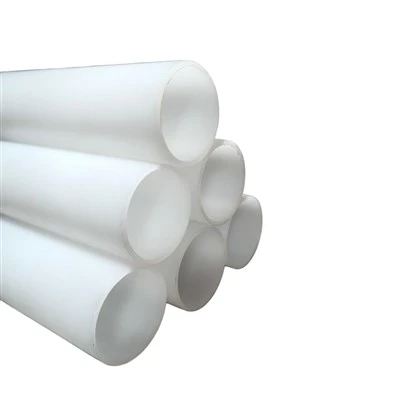
If you’re in the market for piping solutions—whether that’s for industrial processes, plumbing, or even residential water systems—you’ve probably come across PPH pipes a bunch. As a PPH pipes supplier, I get asked about temp resistance all the time, and honestly, it’s one of the first things people want to know before they commit to any pipe material. No one wants to drop cash on pipes that’ll warp, crack, or just plain fail when the heat turns up (or down, for that matter). Let’s break this down so you don’t have to dig through a bunch of jargon-heavy technical docs just to figure it out.
First off, let’s keep it simple: PPH stands for Polypropylene Homopolymer, right? It’s a thermoplastic made from propylene monomers, and that makeup directly dictates how it handles different temps. A lot of folks mix it up with other polypropylene types, like random copolymer (PPR) or impact copolymer (PPC), but homopolymer has its own sweet spot when it comes to temp performance. I see this confusion all the time—someone’ll ask for “polypropylene pipes” and end up with the wrong one for their project, so that’s why I lead with clarifying PPH specifically.
Now, the temperature resistance range. Here’s the real deal: in its standard, unmodified form, PPH pipes work best from around -10°C (14°F) up to a max continuous temp of about 95°C (203°F). Wait, hold up—let me emphasize “continuous” here, because that’s a big caveat. No pipe can handle extreme heat nonstop without breaking down. If you’re running water at 95°C consistently (like for industrial hot water loops or large-scale heating systems), PPH’s still solid, but you can’t push that much higher. Spikes? Like, if you have a sudden surge to 100°C (212°F) for a few minutes? That’s totally fine, no issues. But leave it at 100°+ for hours, and you’ll start to see things soften, lose structural rigidity, and eventually leak or crack.
What about the cold end? A lot of people only care about heat, but low temp is just as important, especially if you’re installing pipes in outdoor, unheated spaces—like a shed, a remote construction site, or even some parts of a cold climate building. PPH doesn’t get brittle like, say, uncoated metal pipe does at freezing temps. At -10°C, it’s still flexible enough to handle minor installation shifts, no cracking when you bend it slightly to fit a tight space. If you go below -10°C? You have to be careful. Installing pipes in temps lower than that without proper insulation or handling during the process can make the material stiffer, more prone to cracking if you drop a fitting or yank a pipe too hard. I’ve had customers in northern states ask about installing PPH in winter, and I always remind them to let the pipes acclimate to room temp inside for a few hours before cutting or fitting—small tip that saves a lot of hassle.
But here’s where it gets a little more nuanced: pressure matters, too. I can’t tell you the temp range without mentioning pressure, because a pipe that works at 10 bar (145 psi) at 20°C is gonna act way different at 80°C. PPH’s pressure rating drops as temp goes up. For example, at 20°C (room temp), standard schedule 40 PPH pipes hold around 16 bar (232 psi) for continuous use. Crank that temp up to 80°C, and that pressure rating plummets to roughly 6 bar (87 psi). At the max continuous temp of 95°C, it’s only about 3 bar (43 psi). That’s not a flaw in the material—it’s how all thermoplastics work: heat makes them less dense, so they can’t handle as much pressure without deforming. I make sure every customer gets this detail, because a lot of folks forget that and end up with pipes that can’t keep up with their system’s pressure when it’s hot.
You might be wondering, “What if I need a pipe that handles higher temps? Can’t I modify PPH?” Yep, you can add additives to PPH to bump up its heat resistance. Things like heat stabilizers, UV inhibitors, or mineral fillers can push that max continuous temp up to 110°C (230°F) or even higher, depending on the modification. But there’s a tradeoff: modified PPH is a little stiffer, less flexible than standard PPH, so it’s not great for areas where you need to bend the pipe on-site without fittings. I stock both standard and modified PPH pipes, so I can match whatever the project needs. For instance, a food processing plant running hot wash water might go for the modified version, while a residential plumbing job might stick with standard since their hot water rarely hits 85°C.
Let me also touch on what PPH isn’t good for, because that ties into temp resistance too. It’s not ideal for continuous exposure to temps over 110°C, no matter how modified it is, and it definitely can’t handle steam (which is way above 100°C). Steam systems usually use metal pipes, not PPH, so if someone comes to me asking for steam piping, I’ll send them in a different direction—no point in wasting their money on a material that’ll fail fast. Same goes for extremely low temps below -20°C; PPH gets too brittle there, so cross-linked polyethylene (PEX) is a better pick for frozen outdoor lines. I’m upfront about that, even if it means selling less of my own product—building trust with customers is way more important than making a quick sale.
Wait, let’s talk real-world examples, because numbers mean nothing without context. Last year, a customer of mine was putting in a solar thermal system for a commercial warehouse. Their hot fluid runs around 85°C most days, with occasional spikes to 90°C. We used standard schedule 80 PPH pipes, which worked perfectly for their pressure (they were at 5 bar, which is well under the 6 bar rating at 80°C). Another customer, a small brewery, needed piping for their mash system, which runs at up to 105°C for a few hours a batch. We used heat-stabilized modified PPH, and that’s held up for over two years now—no warping, no leaks. On the flip side, I’ve had a guy come to me once with a story of buying cheap, unbranded PPH pipes for his backyard hot tub, which runs at 102°C constantly. His pipes started softening and leaking after a month, because the unmodified PPH wasn’t rated for that sustained temp. That’s why I always tell people to go for reputable, tested pipes—some cheap overseas stuff cuts corners on additives, so their temp rating is way lower than advertised.
Another point I get asked a lot: how does PPH compare to other common pipe materials when it comes to temp? Let’s keep it simple. Copper, for example, handles way higher temps—like up to 200°C— but it’s heavy, prone to corrosion, and way more expensive. PVC (polyvinyl chloride) maxes out around 60°C for continuous use, so it’s a no-go for hot water lines. CPVC (chlorinated PVC) is a little better, up to around 90°C, but it’s more brittle than PPH at low temps. PPH hits a sweet spot between heat resistance, flexibility, cost, and chemical resistance—plus it doesn’t corrode, which is huge for industrial or food-grade systems. That’s why it’s become so popular in the last 10 years, and why I see demand for it going up every year.
Now, let’s wrap this up with what you need to actually take away. If you’re working on a project, here’s the quick checklist for PPH temp resistance:
- Standard PPH: -10°C to 95°C continuous, max 100°C short-term spikes.
- Modified/heat-stabilized PPH: -15°C to 110°C continuous, still handles short spikes above that.
- Always match pressure to temp: as temp goes up, pressure rating drops—don’t skip that step.
- Avoid PPH for continuous temps over 110°C, steam, or temps below -20°C.
As a supplier, I don’t just send you a pipe and hope it works. I walk through your project specs with you—what’s your system’s average temp, pressure, installation location, any chemical exposure? I’ve helped folks switch from PVC to PPH when their hot lines were failing, and I’ve steered them away from PPH when a different material would be a better fit. That’s the service side of things that a lot of suppliers skip, and it’s why regular customers come back to me again and again.
If you’re currently working on a project and need to confirm if PPH is the right fit, or you have questions about temp ratings for a specific application, don’t hesitate to reach out for a chat. I can send over technical specs, sample pipes, or just bounce ideas around to make sure you get the right solution for your needs. No sales pressure, just straight answers about what’ll work best for your project.
PVDF Pipes References
- National Plastic Pipe Association. (2022). Thermoplastic Pipe Temperature Resistance Guidelines.
- Polypropylene Industry Association. (2023). PPH Pipe Material Properties and Performance Standards.
- International Organization for Standardization. (2021). ISO 15494: Plastics Piping Systems for Industrial Applications – Polypropylene Pipes and Fittings.
Anhui Weidong Pipeline Technology Co., Ltd.
As one of the most professional PPH pipes manufacturers and suppliers in China, we have world-leading production equipment and strong manufacturing capabilities. Please feel free to buy high quality PPH pipes at competitive price from our factory. Welcome to contact us for quotation.
Address: No. 35 Hongyuan Avenue, Economic Development Zone, Huoshan County, Lu’an City, Anhui Province
E-mail: 18056040225@163.com
WebSite: https://www.wdpipe.com/
