Alright, let’s cut to the chase—if you’ve ever had to move heavy stuff around a workshop, construction site, or even a garage, chances are you’ve seen a chain hoist in action. Maybe you’ve used one before, or maybe you’ve just stared at that loop of steel chain hanging from a beam, wondering how on earth it manages to lift hundreds or even thousands of pounds without collapsing. As a chain hoist supplier, I get questions about this all the time—people want to know the science behind these workhorses, and honestly? It’s way simpler than most folks think. Let’s break it down like I’m explaining it to a buddy who’s never touched one before. Chain Hoist
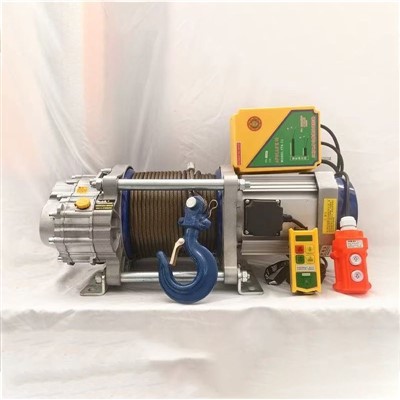
First off, let’s start with the basics: what a chain hoist actually is. It’s not some complicated, fancy machine (thank goodness)—it’s a manual or electric tool designed to lift and lower heavy loads vertically, right? Manual ones are the ones you pull by hand, and electric ones plug into a power source to do the heavy lifting for you. Either way, they all rely on the same core mechanical principles to get the job done. Let’s dive into the key parts first, because if you know the components, you’ll get how it works in no time.
The main bits of a typical manual chain hoist are the housing, the hand chain, the load chain, a gear system, and a load hook. The electric ones add a motor, a control panel, and maybe a brake, but again—same logic applies. Let’s start with the gear system, because that’s the real magic here. Ever heard of a gear ratio? That’s the secret sauce for lifting heavy things without using superhuman strength. A gear ratio is just the number of teeth on one gear compared to another, and it lets you trade force for distance. Like, if you have a small gear turning a big gear, the small gear has to spin a lot to make the big gear spin once—but that big gear has way more torque (rotational force) to lift heavy loads. That’s exactly what’s happening in a chain hoist.
Let’s walk through a manual hoist step by step because it’s easier to follow. When you stand there and pull that hand chain over and over, that’s turning a small hand gear. That small gear is connected to a series of larger gears inside the housing—usually two or three, depending on how much weight the hoist is rated for. Each of these gears increases the torque, so by the time the last big gear turns, it’s got tons of twisting power. That big gear is connected to a sprocket (that’s the wheel with teeth that the load chain wraps around). When the sprocket turns, it pulls the load chain up, which is attached to the load hook holding your heavy thing.
Wait, but why doesn’t the load just fall back down when you stop pulling the hand chain? Oh right, there’s a braking system built in. It’s not some fancy car brake—usually it’s a ratchet and pawl mechanism, which you’ve definitely seen in action before if you’ve ever used a wrench with a ratchet. The pawl is a little hook that fits into the teeth of the ratchet gear connected to the lifting sprocket. When you pull the hand chain to lift, the pawl slides over the teeth one by one, letting the sprocket turn forward. If you stop pulling or try to lower, the pawl drops into the next tooth, locking the sprocket in place so it can’t spin backward. That’s a game-changer for safety, because you don’t have to hold the load the whole time—you just let go, and it stays right where it is.
Now, let’s talk about load chain vs. hand chain, because they’re not the same size. The load chain is way thicker and heavier-duty, right? That’s because it’s carrying the entire weight of your load. It’s usually made of high-grade steel, heat-treated to be super strong and resistant to stretching or breaking. The hand chain is thinner, made for pulling, not lifting, so it doesn’t need that same heavy-duty build. Also, the two chains run on different sprockets inside the housing, so they never get tangled up—good thing, because tangled chains are a nightmare in a tight space.
What about electric chain hoists, since those are super common in factories now? They work on almost the exact same principles, just instead of your hand turning the small gear, an electric motor does it. The motor is connected to the same gear system, which amplifies the torque, and it also has a built-in braking system (usually an electromagnetic brake instead of a ratchet, which is smoother for frequent use). Electric hoists have a control pendant that lets you lift and lower with the push of a button, and some even have features like limit switches that stop the hoist if it gets too high or too low, to prevent damage.
I get it, you might be thinking, “Okay, that makes sense for small loads, but how do they lift 10,000 pounds or more?” That all comes down to the gear ratio. Let’s do a quick example to make it real. Say you have a manual chain hoist with a gear ratio of 20:1. That means for every 20 feet you pull the hand chain, the load chain moves 1 foot. Now, work out the force: if you can pull with 50 pounds of force, the hoist will multiply that by 20, giving you 1,000 pounds of lifting force. If you need more, the gear ratio can be higher—some industrial hoists have ratios of 50:1 or even higher, so a small pull translates to tons of lifting power. It’s basic physics: work (force times distance) is constant, so if you use less force, you have to move that force over a longer distance to get the same total work. That’s why you pull the hand chain so many times instead of just yanking it once.
But here’s the thing—this isn’t just theory. Every chain hoist we sell is built to strict weight ratings, and we test each one to make sure it can handle that load without fail. We’ve all seen stories of hoists failing, but that’s usually because someone’s using a hoist that’s not rated for the load, or they’re not maintaining it. A well-maintained chain hoist is one of the safest tools you can use on a job site. That’s why as a supplier, we always stress checking the load rating before you lift—never exceed what the hoist is made for. A 1-ton hoist can lift 2,000 pounds, that’s it—don’t try to squeeze 2,500 pounds into it, no matter how much you think it “feels like it should work.”
Another common question I get: “How do you lower the load without it slamming down?” On manual hoists, there’s usually a little lever (called a load brake lever) that you push to release the pawl from the ratchet gear. When you push that lever, the pawl lifts out of the teeth, so you can control how fast the sprocket turns by how much you push the lever. Slow, steady pressure is key here—don’t yank the lever all the way, that’ll make the load drop fast, which is dangerous. Electric hoists work similarly—you press the lower button slowly, and the electromagnetic brake releases just enough to let the motor spin the opposite direction, lowering the load at a controlled speed.
Wait, what about different types of chain hoists? Some are for overhead use, some are for mobile applications (like on a crane), some are even for tight spaces like in a basement or engine bay. The core mechanics stay the same, but the housing, hooks, and chain length change depending on the job. For example, a construction hoist might have a longer load chain to reach higher up a building, while a garage hoist might have a compact housing to fit in a small ceiling space.
I’ve been in this industry long enough to see firsthand how a good chain hoist can make a job way easier and safer, and a bad one can turn a simple lift into a disaster. That’s why we only source hoists from trusted manufacturers, and we test every unit we sell before it leaves our warehouse. We also offer maintenance tips—like cleaning the chains regularly, lubricating the gears every few months, and inspecting the hooks and chain for any signs of wear (like rust, cracks, or stretched links). Even a small crack in a chain link can lead to a huge failure, so never skip those inspections.
Let’s circle back to how it all works, just to make sure we didn’t miss anything. The whole process boils down to four key steps: 1) You apply force (pulling the hand chain or pressing an electric button) to turn a small input gear. 2) The gear system multiplies that force into massive torque to turn the lifting sprocket. 3) The ratchet/pawl or electromagnetic brake locks the sprocket in place when you stop, so the load doesn’t fall. 4) The sprocket turns to pull the load chain up (or let it down, when you release the brake), moving the heavy load safely. That’s it—no magic, just smart engineering and basic physics that’s been around for hundreds of years, even if the modern steel chain is way stronger than the old rope and pulley systems.
If you’re in the market for a chain hoist—whether it’s for a small workshop, a construction site, a warehouse, or anything in between—don’t overcomplicate it. The key things to look for are the load rating, the type (manual vs electric), the chain length you need, and how it will be mounted. As a chain hoist supplier, we can help you pick the right one for your specific job, no matter how big or small. We don’t do one-size-fits-all, because we know every lift is different.
If you have questions about how a chain hoist works, or you’re ready to get a quote for one that fits your needs, reach out. We’re here to help, whether you’re a first-time buyer or a seasoned pro who’s been using these tools for decades. Don’t risk your safety (or your load) on a cheap, untested hoist—invest in a reliable one that does the job right, and you’ll wonder how you ever worked without it.
Lifting Auxiliary Frame References
- American Society of Mechanical Engineers. (2020). Standard for Cranes and Hoists: Safety Requirements. ASME International.
- Manufacturing Engineers Handbook. (2018). Material Handling Equipment, 5th ed. Society of Manufacturing Engineers.
- OSHA. (2021). Powered Industrial Trucks and Hoists Safety Guidelines. Occupational Safety and Health Administration.
- Machine Design Fundamentals. (2019). Gear Ratios and Torque Amplification. Elsevier Inc.
Hebei Hengtai Crane Machinery Manufacturing Co., Ltd.
As one of the leading chain hoist manufacturers in China, we warmly welcome you to buy bulk discount chain hoist in stock here from our factory. All customized products are with high quality and low price. For more cheap products, contact us now.
Address: Weigezhuang Village, Donglu Township, Qingyuan District, Baoding City, Hebei Province
E-mail: hbht@cnhengtai.com
WebSite: https://www.cnhengtai.com/
