If you’ve ever worked with industrial hoses—whether in automotive, aerospace, food processing, or fluid transfer—you know most hoses are straightforward: uniform cylinders, predictable dimensions, easy to source and install. But when it comes to irregular silicone hoses, things get a lot more interesting (and a lot more risky if you skip the right precautions). As a supplier who’s specialized in custom and non-standard silicone hoses for 12 years, I’ve seen firsthand how the unique shape of these hoses can turn a routine installation into a safety hazard fast. I’ve also talked to technicians, plant managers, and engineers who thought they could treat an irregular hose the same way they’d treat a standard one—and learned the hard way why that’s a mistake. Irregular Silicone Hose
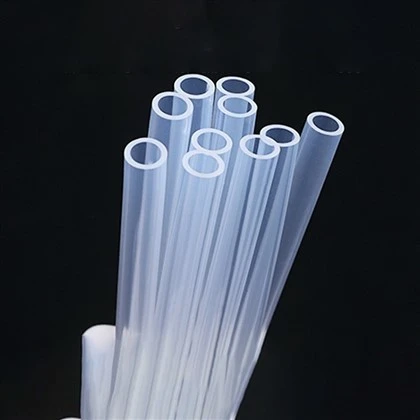
First, let’s clarify what an irregular silicone hose is, because not everyone uses the term the same way. For us, an irregular silicone hose is any hose that deviates from the standard 1.5-inch, 2-inch, or 3-inch uniform cylinder you’ll find in most parts catalogs. That could mean a hose with an offset port to fit a tight engine bay, a tapered shape to connect two pipes of different diameters, a multi-lobed design for vibration isolation, or even a custom curve shaped to fit a unique industrial setup. These hoses solve real problems: they fill gaps that standard hoses can’t reach, reduce the need for multiple fittings, cut down on leakage points, and save space in cramped systems. But their non-uniform design creates safety blind spots that you just don’t have with a straight, round hose.
The biggest mistake I see people make is assuming that because silicone is known for being flexible, heat-resistant, and durable, any irregular silicone hose is inherently safe. That’s a dangerous misconception. Silicone does have great properties—it can handle temperatures from -70°F to 500°F, is resistant to chemicals like oils and coolants, and is non-toxic, which makes it perfect for food and medical applications. But those same properties don’t override the safety risks that come with an irregular shape, especially if the hose isn’t manufactured or installed correctly.
Let’s start with manufacturing-related precautions, because even the best installation won’t fix a poorly made irregular hose. As a supplier, we go to great lengths to ensure our hoses are built for safety, but there are a few things our customers can ask for (and verify) to make sure the product they receive is up to par. First, check for consistent wall thickness. Standard hoses are easy to mold with uniform walls, but when you have an irregular shape—like a tapered hose that narrows by an inch over 12 inches—changing wall thickness is a common manufacturing shortcut. If the wall is too thin in a narrow section, that part can bulge under pressure or crack under extreme temperatures. If it’s too thick in a curved section, it can be rigid and prone to splitting when you try to fit it. We use computer-aided design (CAD) to map out wall thickness across every part of an irregular hose, then use precision molding tools to ensure even a complex lobe shape has walls within 0.01 inches of the desired thickness. That’s not standard for all suppliers, so if you’re ordering an irregular hose, ask to see the wall thickness testing report—any reputable manufacturer should have that on hand.
Next, ask about the reinforcement layer. Almost all silicone hoses use a fiber or steel reinforcement to prevent collapsing or bursting under pressure. For straight hoses, that reinforcement is woven evenly around the entire circumference, but for irregular shapes, you have to adjust the reinforcement to fit the shape. For example, a curved hose will have more tension on the outer curve, so the reinforcement there needs to be thicker or stronger to handle that stress. A multi-lobed hose needs reinforcement that’s flexible enough to move with the lobes but sturdy enough to hold pressure. I once had a customer send back an irregular hose that burst at the first use, and when we tested it, we found the supplier had used a standard woven reinforcement layer, not adjusted for the curved shape. The outer curve stretched beyond its limit, and the hose split right along the bend. So when ordering, confirm that the reinforcement is custom-tailored to the hose’s specific shape, not just a one-size-fits-all woven layer. Also, for hoses that will handle high pressure (over 100 PSI), make sure the reinforcement is a double layer—we always use double reinforcement for our high-pressure irregular hoses, and we mark each one with a pressure rating right on the hose for easy reference.
Now, moving from manufacturing to installation—this is where 70% of the safety issues with irregular hoses happen, in my experience. Even a perfectly made hose will fail if you install it wrong. The first big one is fitting the hose to the correct fittings. Standard hoses use clamps that fit uniformly around a round hose, but irregular hoses have flat sides, curves, or non-round ports, so a standard clamp won’t seat properly. If you use a standard worm clamp on an irregular hose, it will only grip at the high points, not the entire circumference, creating gaps that lead to leaks. Those leaks might seem small at first, but if you’re moving hot coolant or high-pressure fuel, a small leak can cause fires, equipment failure, or even injury. We recommend using custom-shaped clamps for irregular hoses, or at minimum, using heavy-duty spring clamps that adjust to the hose’s shape and apply consistent pressure all around. Another common installation mistake is stretching the hose too far to fit the ports. Silicone is flexible, but stretching it beyond its rated elongation (usually around 100-150% for standard silicone) weakens the material, especially in irregular sections. If you have to pull an irregular hose more than a few inches to connect two ports, that’s a sign you need a custom-shaped hose, not an off-the-shelf one that’s being forced into place.
Then there’s the issue of routing and support. Irregular hoses are often used in tight spaces, like around engine parts or in industrial machinery, which means they can rub against sharp edges or other components over time. Unlike standard straight hoses, which only have two points of contact, irregular hoses have more surfaces that can rub, leading to abrasion and premature failure. We always advise our customers to add support brackets or insulation to protect the hose from rubbing, especially if it’s in a high-vibration area. For example, in automotive applications, an offset hose that’s running along a metal frame will rub against the frame every time the engine vibrates, so adding a small rubber sleeve or a mounting bracket can prevent that. Also, never route an irregular hose in a way that creates sharp kinks. Even a small kink in a curved hose can block flow and create pressure buildup, leading to burst hoses. I learned this early on when a customer installed a tapered hose for their hydraulic system, routed it in a way that created a tight kink, and within an hour the hose burst at the kink, spilling hydraulic fluid all over a hot engine and causing a small fire. Kinks are easy to avoid if you plan the route before installing—lay the hose out in its final position first, mark any areas that are too tight, and adjust the shape before you secure it.
Another safety precaution that’s often overlooked is testing and maintenance. Irregular hoses are subject to the same wear and tear as standard ones, but their unique shape makes them harder to inspect. For example, a lobed hose might have crevices where debris or chemicals can get trapped, leading to degradation that you can’t see on the surface. We recommend doing a visual inspection of irregular hoses every 30 days, or every 100 hours of operation, whichever comes first. When inspecting, pay special attention to curved sections, lobes, and the points where the hose connects to fittings—those are the areas that see the most stress. Look for cracks, bulges, or discoloration, which are signs that the hose is starting to fail. For hoses that handle harsh chemicals or high temperatures, we also recommend doing a pressure test once a year to check for hidden weaknesses in the hose walls. Unlike standard hoses, irregular ones can have hidden thin spots that only show up under pressure, so a pressure test is a crucial safety step that many companies skip.
There are also specific safety precautions depending on what the hose is used for. For example, if you’re using an irregular silicone hose for food and beverage applications, you need to make sure it’s FDA-approved. Not all silicone is food-grade, and irregular hoses can have hidden areas where non-food-grade material was used, which can leach chemicals into food or drinks. We test all our food-grade irregular hoses for FDA compliance, and we provide a certification with every shipment so our customers can be sure they’re meeting safety regulations. For hoses used in aerospace or automotive applications, you need to make sure the hose is resistant to the specific chemicals and temperatures it will be exposed to. A hose that works for coolant might not work for fuel, even if it’s the same shape—ask the supplier for material data sheets (MDS) that list the hose’s resistance to specific substances. For high-pressure applications, like hydraulic systems, make sure the hose is rated for 2-3 times the maximum pressure of your system. That extra safety margin prevents burst hoses from overpressure, which is a major safety hazard in industrial settings.
I also want to talk about something that’s close to my heart: working with a reputable supplier. As an irregular silicone hose supplier, I’ve seen a lot of cut-rate hoses that are made with cheap silicone, no reinforcement, and inconsistent manufacturing. These hoses might be cheaper upfront, but they’re a safety risk and end up costing more in the long run when they fail. When you’re ordering an irregular silicone hose, don’t just look at the price—ask questions: What material is it made of? Is there a reinforcement layer, and is it custom for the shape? What’s the pressure and temperature rating? Do you have testing reports and certifications? Any supplier that stands behind their product will be able to answer these questions quickly and provide the documentation you need. If a supplier won’t give you that information, or only offers one-size-fits-all hoses for irregular shapes, that’s a red flag.
Let me share a recent example that drives this home. A customer contacted me a few months ago because their custom curved silicone hose kept failing every 2 weeks, and they were getting frustrated with downtime and safety concerns. When I looked at their old hose, I could see why it was failing: the supplier had used a straight reinforcement layer on a curved hose, so the outer curve stretched until it split, and they had installed it without any support, so it was rubbing against a metal pipe every time the machine ran. We made a new hose for them with custom tailored reinforcement, matched the wall thickness exactly to their curve, and included mounting brackets. They installed it 8 months ago, and haven’t had a failure since. That’s the difference between a good irregular silicone hose and one that’s a safety hazard.
At the end of the day, irregular silicone hoses are an invaluable solution for countless industries, but they’re not a set-it-and-forget-it product. The shape that makes them so useful is also what makes them tricky to manufacture, install, and maintain. By taking the time to work with a reputable supplier, verifying the manufacturing details, installing the hose correctly, and doing regular inspections and maintenance, you can avoid almost all the safety risks that come with irregular silicone hoses.

If you’re working on a project that needs a custom or irregular silicone hose, and you want to make sure you’re getting a product that’s safe, reliable, and built for your specific needs, reach out to us to discuss your requirements. We’ll work with you to design, manufacture, and supply a hose that fits your application perfectly, with all the safety features you need. Whether you need a hose for automotive, food processing, aerospace, or any other industry, we have the experience and expertise to help you.
Chemical Hose References
- Society of Automotive Engineers (SAE). "Performance Standard for Silicone Rubber Hoses for High-Temperature Applications." SAE International, 2021.
- Food and Drug Administration (FDA). "Compliance Policy Guide: Silicone Elastomers for Food Contact Use." U.S. Food and Drug Administration, 2022.
- Rubber and Plastic Hose Manufacturers Association (RPHMA). "Best Practices for Installation and Maintenance of Non-Standard Hoses." RPHMA, 2020.
- Aerospace Industries Association (AIA). "Specification for Silicone Rubber Hoses for Aerospace Fluid Systems." AIA, 2019.
- International Organization for Standardization (ISO). "Rubber Hoses and Hose Assemblies for Pressure Applications – Specification." ISO 1436-1:2018.
Ningbo Haidu Auto Parts Co., Ltd.
As one of the most professional irregular silicone hose manufacturers and suppliers in China, we’re featured by cheap products and good service. Please rest assured to buy durable irregular silicone hose at competitive price from our factory. Also, OEM service is available.
Address:
E-mail: Sale6@sterlingautoparts.com
WebSite: https://www.cnsiliconehose.com/
