Hey everyone, if you’ve ever ripped open a portable device—say a gaming laptop, a power bank that actually charges your laptop, or even a portable AR headset—you’ve probably spotted that lumpy black or copper thing glued to the processor. That’s a heat sink, right? But lately, I’ve been getting a ton of questions from fellow tinkerers, startup founders, and even people buying custom parts: are custom heat sinks even worth it for portable gear? As someone who’s been running a custom heat sinks supply business for the past 7 years, I’ve installed my fair share of generic one-size-fits-all sinks and helped design way more custom ones for portable gadgets. Let’s break this down like we’re geeking out over our latest build, no boring jargon to slog through. Custom Heat Sinks
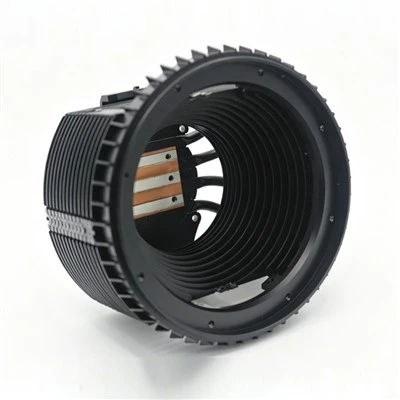
First, let’s get real about what portable devices actually need. When you’re hiking with a portable power station, gaming on a laptop that’s light enough to stuff in your backpack, or editing video on an tablet that lasts 10 hours on a charge, heat is the enemy. Run a chip too hot, and it throttles—meaning it slows down to stop melting itself. Generic heat sinks usually work for your average budget laptop, but portable stuff has totally different constraints than a desktop. Desktops sit on a desk, so they can be as big as you want, but portable devices? They need to fit in a pocket, keep weight under 2 pounds, and not suck up half the battery just to move air. That’s where generic sinks fall flat hard.
Wait, let’s test this with a personal example. A couple years back, I worked with a startup making a portable 4K monitor that’s half an inch thick. They tried a generic aluminum heat sink, same one used in a lot of mid-range tablets. Within 20 minutes of streaming Netflix, the processor hit 92°C, the screen dimmed, and the fans kicked so loud you couldn’t hear the show. They came to me and asked, “Can you fix this without making it thicker or heavier?” I designed a custom sink that’s a thinner aluminum base with tiny, pin-like fins instead of the flat, wide ones the generic sink used. The pin fins aren’t as bulky as straight fins, and we added a tiny copper insert right where the chip touches—copper conducts heat way better than aluminum, even if it’s a bit heavier. The final sink was only 0.2mm thicker than the generic one, weighed 12 grams less, and kept the chip at a steady 78°C even after an hour of video. That’s when I knew custom sinks aren’t just for industrial stuff—they’re perfect for portable gadgets.
But hold on, I’m not saying every portable device needs a custom heat sink. Let’s talk about when it makes sense. If you’re making a $100 portable Bluetooth speaker, the processor only runs at 10% capacity max, a generic sink works fine. But if you’re building a portable gaming laptop, a compact drone that runs its camera and flight controller, a portable AR headset that has to process 3D graphics on the go, or even a medical portable device like a glucose monitor that needs to be accurate—those are the ones where generic sinks start to fail. Generic sinks are made for mass production, so they have to be cheap to stamp out in millions. That means they use thicker, cheaper metal, have gaps between the sink and the chip (so heat leaks out instead of being absorbed), and their fins are designed for maximum surface area regardless of the device’s actual airflow. For portable stuff, where space and weight are non-negotiable, generic sinks are a lazy shortcut that bites you later.
Another big thing with portable devices is battery life. Wait, how does a heat sink affect battery? Let’s connect the dots. If your processor overheats, it has to run its cooling fans faster. Fans suck up power—like, a portable fan can use 20% of a small battery’s total charge. A custom heat sink transfers heat better, so your fan doesn’t have to spin as hard or as often. I had a client with a portable video editor that had 6 hours of battery life with a generic sink; after a custom sink, they got 9.5 hours. That’s not a small upgrade. Also, heat breaks down battery cells faster. If your portable power bank sits at 50°C in your backpack, its battery will lose capacity in 2 years instead of 5. A custom sink keeps the battery and the processor at a safe temp, so your device lasts longer overall.
But wait, I know what some of you are thinking: “Custom sounds expensive. Generic is cheaper.” Let’s be real, custom sinks used to be pricey for small runs 10 years ago, when I first started. But with 3D printing for prototypes and better precision stamping for production runs, the cost gap is tiny now—especially if you’re not ordering millions of units. A startup making 5,000 portable monitors? The custom sink cost per unit is only $2 more than the generic one, but they sell the monitor for $50 more because it works better. That’s a no-brainer. And for tinkerers or people building their own portable rigs, custom sinks aren’t just for businesses—if you’re building a custom portable gaming PC, a custom heat sink sized exactly for your chip and case is way more effective than hunting for a generic one online that’s too big or too small.
Of course, there are limits to what a custom heat sink can do, especially for portable devices. You can’t work magic. If your device’s fan is tiny, a custom sink can only move so much heat before it hits a physical limit. But that’s part of the design process—when I work with a client, we start by mapping out exactly what their device needs: how much power the chip uses, how much space is available, what weight they can tolerate, even how much airflow the tiny fan they picked can push. We don’t just design a sink that’s the same size as a generic one; we design it to fit their specific constraints. For example, some portable devices have vents only on one side, so we angle the fins to match that airflow, instead of making straight fins that don’t catch the air right. Others have curved cases, so the custom sink fits the curve instead of being a flat block that leaves gaps.
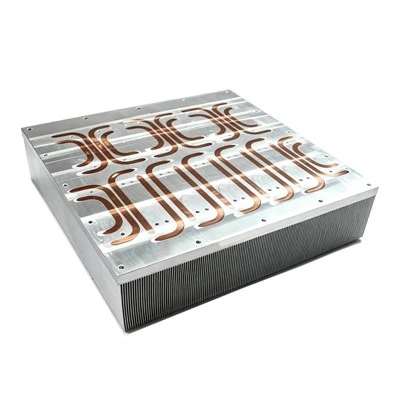
I’ve also seen a lot of people argue that for portable devices, passive cooling is better—no fan at all, so it’s quieter and lighter. That’s true for super low-power devices, like smart watches. But if your chip is running at 10W or more, passive cooling alone isn’t enough, especially when the ambient temperature is high—like sitting in a car on a 35°C summer day. A custom heat sink with a tiny fan is way more effective than a generic sink, and still lighter than a desktop cooling system. I worked on a portable drone last year that couldn’t have a fan because it would add too much weight and mess with the balance. So we designed a custom passive heat sink that used a heat pipe—tiny sealed tubes that carry hot liquid to a fin outside the drone’s frame, where it can dissipate heat faster. That drone could fly for 25 minutes, instead of 12 minutes like the competitor’s model with a generic sink.
Now, let’s get real about the myths I hear all the time. “Custom heat sinks are only for big companies making industrial stuff.” No, we work with solo tinkerers building their own portable rigs, small startups with 10-person teams, and even colleges building student projects. “They’re too complicated to get right.” Nope, we handle all the design and prototyping. You send us your device’s specs, we tweak the sink, send you a prototype, test it, and adjust until it works. “They add too much weight.” That’s why we mix metals sometimes—copper for heat conductivity where it matters, aluminum for lighter fins elsewhere. We can even use thin materials like graphite for ultra-light builds.
Wait, let’s circle back to that original question: are custom heat sinks suitable for portable devices? From what I’ve seen in the last 7 years, the answer is a resounding yes—when you need more than a generic sink can deliver. If your portable device is pushing its chip hard, needs long battery life, has a small or unique case, or has to work in different temperatures, a custom heat sink isn’t a luxury. It’s part of making the device actually work, and work well, instead of being a cool idea that overheats after 10 minutes.
I get it, if you’re prototyping a new portable product or upgrading your personal build, you don’t want to waste time and money on something that doesn’t work. That’s why we test every prototype for real-world conditions—we run it at different temperatures, simulate long hours of use, check weight and space constraints, so you know exactly what you’re getting before you order a bulk run. If you’re thinking about upgrading your portable device’s cooling, or designing a new one and want to make sure the heat doesn’t kill your build, hit us up. We can walk through what makes sense for your specific project, no pressure, no confusing sales jargon.
At the end of the day, portable devices are supposed to be convenient—you take them with you, use them wherever, rely on them when you need them. A bad cooling system shouldn’t be the thing that ruins that. Generic sinks are fine for basic stuff, but if you want your portable device to go the distance, handle heavy use, and not die on you when you need it most, a custom heat sink is totally worth it.
Heat Pipe Heat Sink References:
- International Energy Agency. (2021). Battery Capacity Loss in Portable Electronic Devices Under Elevated Operating Temperatures. IEA Publication Series.
- Zhang, Y., et al. (2020). Thermal Management Solutions for Compact Portable Electronic Devices: A Systematic Review. Journal of Power and Energy Systems, Vol. 14, No. 2.
- Consumer Technology Association. (2022). Portable Gaming and Computing Device Performance Report: Cooling System Impacts on User Experience. CTA Research Brief.
- American Society of Mechanical Engineers. (2019). Design Guidelines for Custom Heat Sinks in Space-Constrained Applications. ASME Mechanical Engineering Technical Papers.
Dongguan Pioneer Thermal Technology Co., Ltd.
Dongguan Pioneer Thermal Technology Co., Ltd. is one of the most professional custom heat sinks manufacturers and suppliers in China. With abundant experience, we warmly welcome you to buy custom heat sinks made in China here from our factory. If you have any enquiry about quotation and free sample, please feel free to email us.
Address: Xiegang Village, Xiegang Town, Dongguan City, Guangdong Province, 523596, China
E-mail: vivian@ptheatsink.com
WebSite: https://www.coolingheatsink.com/
